REFLECTING ON THE CBNRM (COMMUNITY BASED
NATURAL RESOURCE MANAGEMENT) MODEL IN ITS CURRENT FORM- PROTECTED AREAS AND THEIR
POTENTIAL TO IMPROVE THE STATUS QUO.
By Izak Smit, chairperson of DeLHRA
(Desert Lions Human Relations Aid).
21 May 2021
This is OP-ED is simply based on the view
of the author based on 32 years of regularly traversing the areas in question
of which the last ten years were spent more intensively focussing on Desert
Lion Human Conflict whilst working with Conservancies and the affected communities.
NAMIBIAN CONSERVATION-BEFORE AND AFTER
INDEPENDENCE 21 MARCH 1990
Before independence, the “Suidwes Afrika
Natuurbewaring” was pretty much run autonomously in a military fashion where
every-one knew their place and a low tolerance for outsiders was maintained.
Discipline was the order of the day and maintenance of infra-structure a high
priority. To the old “Bokkiewagters” (Game Rangers), it was not a job but a
calling and way of living. The top structure ruled with an iron fist and outsiders
were viewed with suspicion and marginalized as the brotherhood stuck together,
much like in the army those years. Appointments were made on the basis of
strict vetting and merit and promotions were hard earned. No one dared to
question or challenge the top “Brass” and the public had “no business
interfering with the work of the Ministry”. NGO’s were unheard of and had no
justification as “Natuurbewaring” had it all “under control”.
In 1990 Namibia gained independence from
the South African Government and this culture was inherited by the new
governing body. The management structure was now changed, and the experienced
and knowledgeable pale males had to clear their desks as cadre deployment
became the order of the day. Few remained as mentors were needed for the
transition as empowerment manifested. Those who remained found themselves in
powerful positions as advisors and mentors as the transition process leaned
heavily on their experience and expertise. Those who were replaced who took the
“Golden Handshake” early retirement/retrenchment packages had to seek new
opportunities where their skills would be relevant and valued. This led to many
of them, people like Jan Joubert, starting up Tourism Safari businesses as
tourism started growing in Namibia while some later formed NGOs.
THE ERA OF NGO’s-
GARTH OWEN SMITH-HIS BOOK “AN ARID EDEN”
AND MARGIE JACOBSON’S BOOK “LIFE IS LIKE A KUDU HORN”
As things developed and the new Ministry of
Environment and Tourism settled in and went through its settling/growing pains,
over the years capacity and resources seemed to have become increasingly
challenged and the ministry’s mandate became more and more impossible to
execute without outside/outsourced assistance. Enters the era of the NGO’s.
Some of the ex-Nature Conservation staff availed themselves and, in time, many
NGO’s were formed. The IRDNC, Integrated Rural Development and Nature
Conservation formed by Garth Owen Smith was one of many. These then joined the
umbrella body NACSO, Namibian Association of CBNRM Support Organisations.
Funding and grants from organisations like WWF floated the financial boats of
these NGO’s and MOU’s with the Ministry of Environment and Tourism (MET) were
signed and collaborations forged. To this day this structure pretty much rules
the roost.
In the beginning Garth Owen Smith’s
organisation was also faced some stonewalling from the MET as can be seen in
his book “An Arid Eden”. In time, after some lengthy and laborious
persuasion, the MET endorsed his
proposed CBNRM (Community Based Natural Resource Management) model and the
first Conservancies were registered in the early 1990’s. The NGO’s that were
“in the fold and toeing the line” now had the political clout needed to operate
and relationships with the newly formed Conservancies were forged. Although
there was some collaboration, each NGO operates independently, has its own
mission and vision, agenda and interests. Many livelihoods are dependent on the
funding these NGOs receive and a number of ex Nature Conservation employees
from the old dispensation found a home here and their knowledge and experience
stood to benefit their organisations.
These NGOs now became the advisors and
consultants of many of the Conservancies and functions like Game counts and
others that the Conservancies’ inexperienced managements needed help with were
often outsourced from/guided by said NGOs.
The books written by the late Garth Owen
Smith, “An Arid Eden”, and his partner Margie Jacobsohn, “Life is like a Kudu
Horn”, gives good perspective of the
history of the IRDNC and how it was established.
While the title of Garth’s book, an Arid
Eden, was appropriate until about 2013/14 it no longer holds true in the face
of the decimation of the wildlife in the conservancies over the last about
seven years. Someone bitterly commented that the title of the book, “Life is like a Kudu Horn”, is actually more appropriate
now since a Kudu Horn is configured like a screw and the game population in the
conservancies are “pretty screwed” right now.
THE RELATIONSHIP BETWEEN MEFT AND
NGO’s-EX BOKKIEWAGTERS AND LIVELIHOODS-DAISY CHAIN AND INTERDEPENDENCE
As many of the NGOs are dependent on
authorisations and permits of some kind from the MET, toeing the line as
dictated by the MET had become a pre-requisite. With-holding a researcher’s
permit or an NGOs work permits needed to operate can mean the end of the line
for that entity. Unsurprisingly therefor, bonding became essential. This
resulted in an “exclusive club” and you could decide whether you are in or out
by pledging subservience to the rules or not. This, in return, ensured
“protection of your turf” and kept annoying newcomers/outsiders out. The
previous Permanent Secretary mastered the art of directing this orchestra
through bullying tactics and strategies. It worked well! In one instance a
newcomer was accepted after arranging study grants for 2-3 MET employees
through his organisation first, a fair exchange? Mutually beneficial deals
involving funding and revenue streams sweetened the arrangement or “Daisy chain”
and in some instances a researcher would team up with a select few NGOs who have
big Tourism interests, a win-win situation of note, although in contrast with
some clear permit provisos!
NGO’s AND THEIR AGENDAS AND
INTERESTS-SPONSORSHIPS
This situation therefor leaves us with a
regulating body dependent on a group of supporting NGOs for the purpose of
executing the ministry’s mandate that are being run like businesses and funded
by corporate donors and sponsors in need of maximum exposure and recognition
for “fulfilling social responsibilities”. Some of the NGOs are also supported
by the private sector and more particularly, tourism operators in a mutually
beneficial arrangement which included commercial film making and the rare high
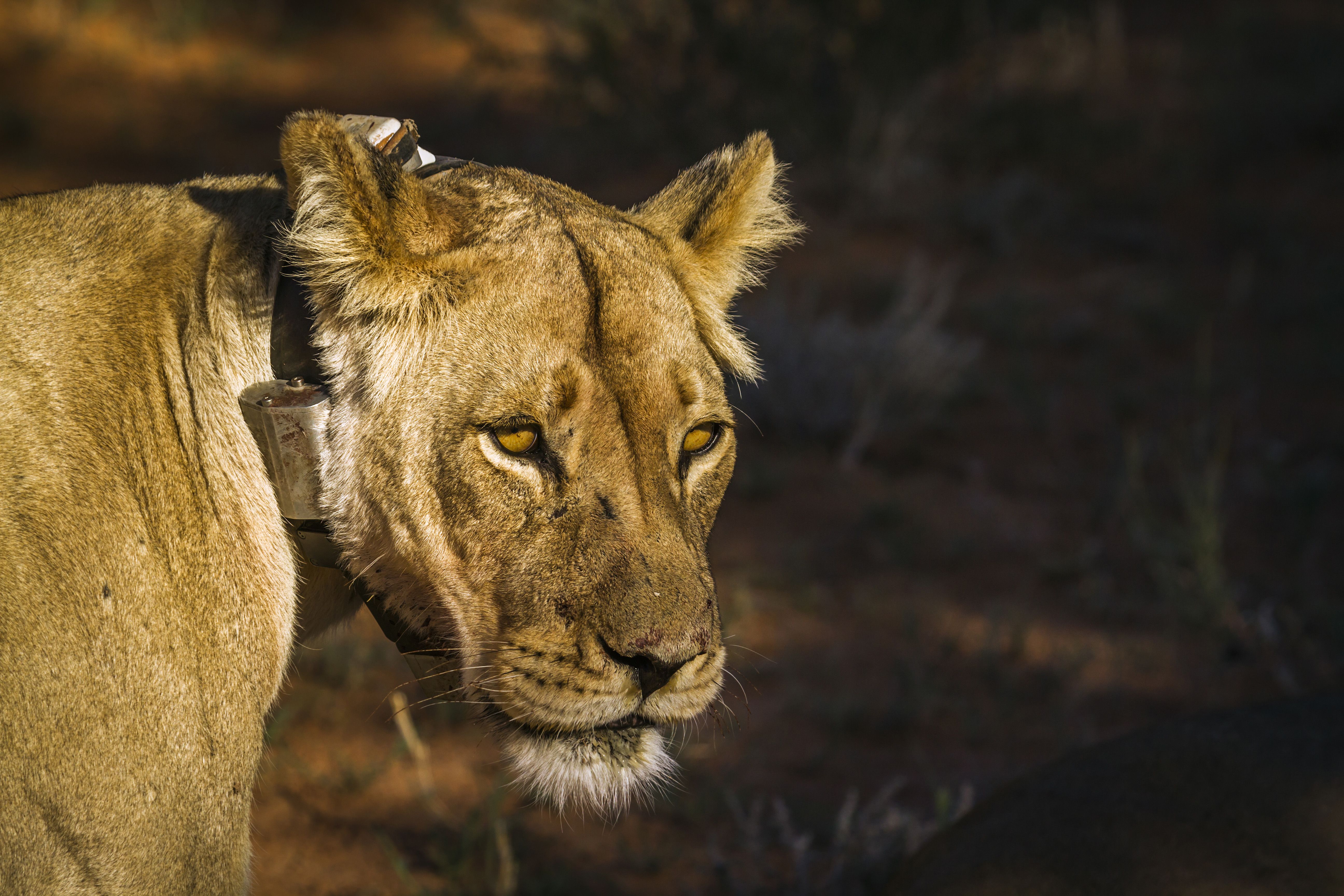
valued privilege to see collared Lions.
Hang on you say, this sounds like mud
slinging and the usual handbag in-fighting amongst conservationists in
competition. No, it is not, it needs mentioning to give perspective on why the
current status quo needs a make-over as the CBNRM model evolved negatively
being driven by self- serving outside influences.
THE OUTDATED CBNRM MANAGEMENT MODEL-NEED
FOR MAKEOVER-SHORTCOMINGS AND MAKE UP- TRIPLICATION OF WILDLIFE-BLURRING OF
LINES-HAVING CAKE AND EATING IT-LEGISLATION AND PROTECTION
When a car starts to smoke, cough, wheeze
and generally starts performing poorly, one is forced to check for the problem.
Is it the gearbox, differential, engine or electrics maybe? If it is all of the
above, you change the whole damn thing.
The CBNRM mode has been going since the
early 1990s which makes it about 26 years old. Things evolve and influences
like climate change changes the variables and essence of such a model over time
and it, inevitably at some stage, needs reviewing. Desertification, both as a
result of overgrazing and climate change has progressed to a point where so-called
traditional farming, nomadic pastoralism and even subsistence farming may no
longer be sustainable or even possible. Traditional farming, in the modern
context has reached proportions in places emulating modern commercial farming
which has no place in an unsuitable, sensitive, arid environment.
Diversification of income is much needed and no traditional, albeit
destructive, livestock farming can hold the environment hostage to its needs
any longer. All of us on this planet are going to have to adapt or, yes, die! A
sixth mass extinction is not just a rumour, the tangible evidence is there for
all to see!
The CBNRM model caters for “sustainable
use”, which includes both consumptive and non- consumptive exploitation of
resources. Currently the lines are blurred and haphazard “zoning” which is
supposed to distinguish between farming, hunting, general, wildlife and tourism
areas, is just a thought which vanishes with the first signs of a drought when
it all becomes available as “emergency grazing” areas. This of course impacts
heavily on the availability of the very scarce nutrition the Wildlife had
become dependent upon as they adapted over centuries to survive in this hostile
environment.
In many instances we have witnessed semi-nomadic
Himba pastoralists and local farmers simply ignoring the Conservancy rules and MEFT
directives by driving large numbers of cattle into ephemeral rivers and areas
“zoned” for Wildlife and Tourism. Even worse, Reed beds would be set alight in
order to induce new growth for the starving cattle with no regard to the
destruction of the environment and ecology. The Huaruseb, Hoanib and Huabrivers
in particular became linear farms in these times to the detriment of and
causing major disturbance to the Wildlife. Since the moratorium on hunting and
utilisation had been announced after it had been discovered that the Game
populations were becoming precariously low, bushmeat poaching increased which
took its toll on the few remaining animals tasked with repopulating the
conservancies in future. Allowance was made for Game to be hunted for purposes
of catering for traditional leadership meetings and in many instances the
animals could not even be found. Some Farmers openly defied the MEFT and Law
enforcement agencies during the drought and the environment paid the price as the
result. The outcome was quite predictable and is now manifesting in starving
predators and ecological systems imploding.
The question that now arises is whether
having your Cake and eating it is possible in this context? The very
environment that attracts Tourism is under siege by Agriculture, the latter
which is clearly failing and not sustainable. In the end it will be either or……
. Either the Environment will have to be protected or it will logically be
overrun and turned into the wasteland it is already fast becoming. The Ministry
of Environment, Forestry and Tourism (MEFT) is regularly on record stating that
the CBNRM model is so successful and serves as a role model to the rest of the
World. It claims that Wildlife had “triplicated” in numbers and that the
current lack of game in the conservancies had been solely caused by the nasty
drought…. . While it is true that game in Namibia has vastly increased over the
years, this can mostly be attributed to the commercial farm owners on freehold
land diversifying in order to survive financially and to optimize their return
on investment. This had been instrumental in building a big Hunting Industry
which contributes handsomely to the GDP. The difference being that the owners
of the game manage it like a business and carefully manage and invest in their
own stock for long term gains. The conservancies, however, being on state land,
are not managed in the same way at all and no real ownership and accountability
exists in this model. Windows of opportunity for corruption, maladministration
and mismanagement are abundant and exploited. This is sadly reflected in the statistics
regarding the high failure rate on financial audits of conservancies in Namibia
(over 84% failed?) and the current, sorry state of affairs regarding the
depleted natural resources.
All of this could not have been intentional
and a large portion of this failure could be attributed to the fact that the
management committees are simply in most cases not equipped to run these
“Parks”. Office bearers in responsible positions in many instances do not have
the knowledge, experience, acumen and training to execute their portfolios. I
do not fix my own plumbing as I would flood the house and possibly the town,
therefore I outsource a Plumber for that purpose. I also do not perform Heart
surgery as I am not qualified to do so. The same holds true here and it is
expected of these people to perform such tasks up to the same standards as a
highly qualified National Parks management structure would deliver? Oh, hang
on, there are many NGOs advising and assisting said Conservancies…. ? Now
therein lies the problem. Different agendas, interests, missions and visions
and in many cases the exact same lack of knowledge, training, experience etc.
and so forth exists within these NGOs. No, badmouthing them is not the purpose,
merely stating the facts here. A lot of confusion and the evident failure of
the current status quo being reflected in the affairs of the conservancies and
state of the environment bears witness to this. Also, after 26 years, if
properly empowered, surely the conservancies would have been able to function
effectively and independently by now?
Let
us face the brutal truth, without insulting any party, the CBNRM model needs a
make-over of note and the drawing board beckons while time runs out!
In our humble opinion, the example of
Africa Parks, set in Africa over the past years as a turnaround specialist is
very relevant. In order to optimize Wildlife and Tourism areas these have to be
identified and clear boundaries defined to begin with. It should then be
gazetted as such, whether as concession area or proclaimed protected area,
either way it must emerge with a status properly protected by legislation and
through law enforcement. Farming, general and hunting areas (the latter clearly
not bordering the protected areas) should be clearly zoned with clear
distinction from the protected areas. This would have the advantage that vast
areas with huge potential like the breath-taking area between the Ugabriver and
the Southern Veterinary fence boundary along the Bergsig/Springbokwasser gate
road including the whole Huab valley can then enjoy the same protection as the
Palmwag concession area and even be integrated with the latter. This will mean
that instead of being a free for all area exploited and damaged by all
currently, it can be developed by concession holders and investors and run like
a park by custodians charged with managing Human Wildlife Conflict, security
and anti-poaching and maintenance while optimizing revenue, creating job
opportunities, skills-development and welfare for the Conservancy communities.
The aim should be proper mentorship and development with clear goal posts
ultimately enabling absolute empowerment over a period. Palmwag concession has
proven its success with Gondwana lodge and the Hoanibriver Wilderness Lodge
contributing substantially to the conservancy coffers. The wheel in this
instance, does not need to be re-invented but merely copied and pasted by
including more protected areas.
Land use guidance and assistance to
subsistence farmers enabling diversification to ensure food security while
downscaling livestock farming to provide sustenance instead of being managed as
a “traditional currency” will be of paramount importance. Considering what the
Israelis harvest from their equally arid Desert there is no shortage of options
that should be investigated and developed. Education and training will be key. Continuing
on the same destructive path currently followed in the name of “traditional
livestock farming” will be short lived considering the progressive
desertification and change and is not negotiable really.
THE DROUGHT AND POOR MANAGEMENT-RESULTS
IN PROTECTED AREAS VERSUS CONSERVANCIES
Good rains on and off had been experienced
between 2007 and 2012 and it was a “time of abundance” during which the
predators, a good barometer of the health of an ecosystem, and their prey
species had multiplied to a point considered as being well balanced. Game
counts, for such an arid environment with below 150 mm of rain falls per year,
were impressive. This was, however, clearly the end of a “boom cycle” and a dry
cycle was to be expected as per the normal and natural ebb and flow trending of
“seven fat and seven lean years” as a well-known, historical phenomena.
The quotas released for the “sustainable” utilisation
of the game were unprecedented and overly generous but according to those
responsible for the game counts, justifiable. People like the well- known
environmentalist Christiaan Bakkes and
myself frowned upon this and we made our disgust publicly known at the time. We encountered Zebras
that were clearly wounded and left to die in the “Red line” veterinarian fence near
Palmwag during one cull of 70 Hartmann Mountain Zebra and Christiaan Bakkes’
article in the Namibian newspaper, titled “End of the Game” described the waste
and massacre on the Giribes Plains amongst other similar cases of
indiscriminate plundering (as per his book “Plunderwoestyn”). This earned him an
end to his long career in the Tourism industry in Namibia due to the
traditional leaders and Chiefs’ wrath incurred.
Not very long after this, filling hunting
quotas started to become problematic as the number of animals available simply
did not match the numbers on the permits anymore. Hunters started to abandon
concessions due to non-viability and the question arose, “where are the
animals?”. A Moratorium on Shoot and Sell and own use was hurriedly imposed as
late as 2017 and after confronting those NGOs responsible for the game counts, we
were “confidentially” told that the scientific formula used for the estimation
of the game numbers had been found to have been flawed and hence optimistically
biased.
With no means of putting the Toothpaste
back into the tube, the damage had been done and we witnessed the resultant
sharp escalation of Human Lion Conflict in these areas from 2014/15 onwards. As
a consequence, this had a big impact on Lion mortalities through poisoning and
shooting by retaliating farmers. In one single incident a Lioness pregnant with
four fully developed and ready to be born, cubs was shot and killed.
When comparing the variance in Predator/Prey
ratios in protected areas, i.e. Palmwag concession, Etosha Park etc. versus the
same in the conservancies, the contrast is shocking. The conclusion can only be
that management, or the lack of it, should be held responsible since the
protected areas had gone through the exact same ordeal caused by the drought.
It has become apparent that, when “sustainable utilisation” quotas were
calculated no, or inadequate provision had been made for Predator requirements,
loss of game to poaching and disease/natural causes and that no contingency/allowance
had been made for core herds needed to repopulate the areas once the wet/boom
cycle begins. The results were clearly starving predators and Human Lion
Conflict escalating to an all-time high. Whenever Humans upset the equilibrium
in nature, Newton’s Law comes into play…..
THE TURNAROUND AND SOLUTION-MANAGEMENT,
BENEFITS-AFRICAN PARKS-REVERSING HABITAT SHRINKAGE-% OF LAND UNDER
“CONSERVATION”-SUCCESS CLAIMS BY MEFT
While it is good and well for the MEFT (Ministry
of Environment, Forestry and Tourism) to boast that about 43% of land in
Namibia is under conservation, the question arises as to how the land outside
of protected areas in this category is being managed and why the disastrous results
and outcome. Having huge areas under conservation devoid of Wildlife due to
poor or inadequate, inefficient management may look good statistically but in
real terms defeats the object. It is common knowledge that the habitat of Lions
in Africa has shrunk by about 80% over that last decades and the same holds
true for the Kunene region, formerly known as Damara and Kaokoland. Where Lions
used to roam from the Ugabriver in the South right up to the Marienfluss in the
North, barring few Lions, most now only occur in the protected Palmwag
concession area. Recently the whole Huabriver Lion population had to be
translocated to a sanctuary due to starvation and more will follow. It would
make more sense to identify areas in Conservancies ideal for Wildlife and
Tourism and convert those to “Park-like concessions” with the appropriate
legislative and statutory protection surely?
A Perfect example of such successful
turnaround endeavours is that of African Parks. So far, they have taken over
management of about nineteen Parks in Africa in countries where conservation
had failed in totality. Their successes in Liuwa Plains and other parks speak
for itself. Not only do they manage the parks but the positive effects of their
Human Wildlife Conflict management, anti-poaching, skills development, job
creation, community welfare and upliftment etc. has made a huge, positive
impact on the lives of those living in close proximity to the parks as well as
conservation. By employing experts and applying sound principles, management
plans and strategies their story is one of success. It simply cannot be
expected that the same results could be obtained by incapable, inexperienced
locals advised by a a mix of, own interest driven NGOs on a hit and miss basis.
The shockingly low game counts leading to the current disastrous ecological
imbalances in the conservancies bears witness to this. The rather desperate,
urgent last-minute efforts by the MEFT to outsource the services of a consultant/advisor
unfortunately casts doubt on their grip on the situation and gives the
impression that they may be at the end of their tether…
CONCLUSION-
The reality is that it is very late in the
day and if Namibia is serious about continuing on the path towards successful
conservation of its natural heritage, no amount of political correctness will
realise this.
We need to accept that things are wrong,
learn from past mistakes and take some concrete action, even if unpopular in
some circles. One cannot simply put a Band aid on a bullet wound. The solutions
are there and need to be expeditiously implemented. For this, Political Will is
required first and foremost. Own interests/livelihoods, egos and needs will
have to take a back seat. Much like the climate change phenomena where some
drastic changes are needed to bring down CO2 emissions which involve sacrifices
and a paradigm shift, conservation has also arrived at a clear crossroad.
In hindsight, the words of Chris Bakkes may
have proven to be prophetic, this could indeed be the “End of the Game” unless
acted upon with urgency….. .
It
would be sad to see the CBNRM model, Garth-Owen Smith’s lifelong dream, disappear
in the Desert dust….
Information from https://www.wwf.org.uk/learn/fascinating-facts/polar-bears
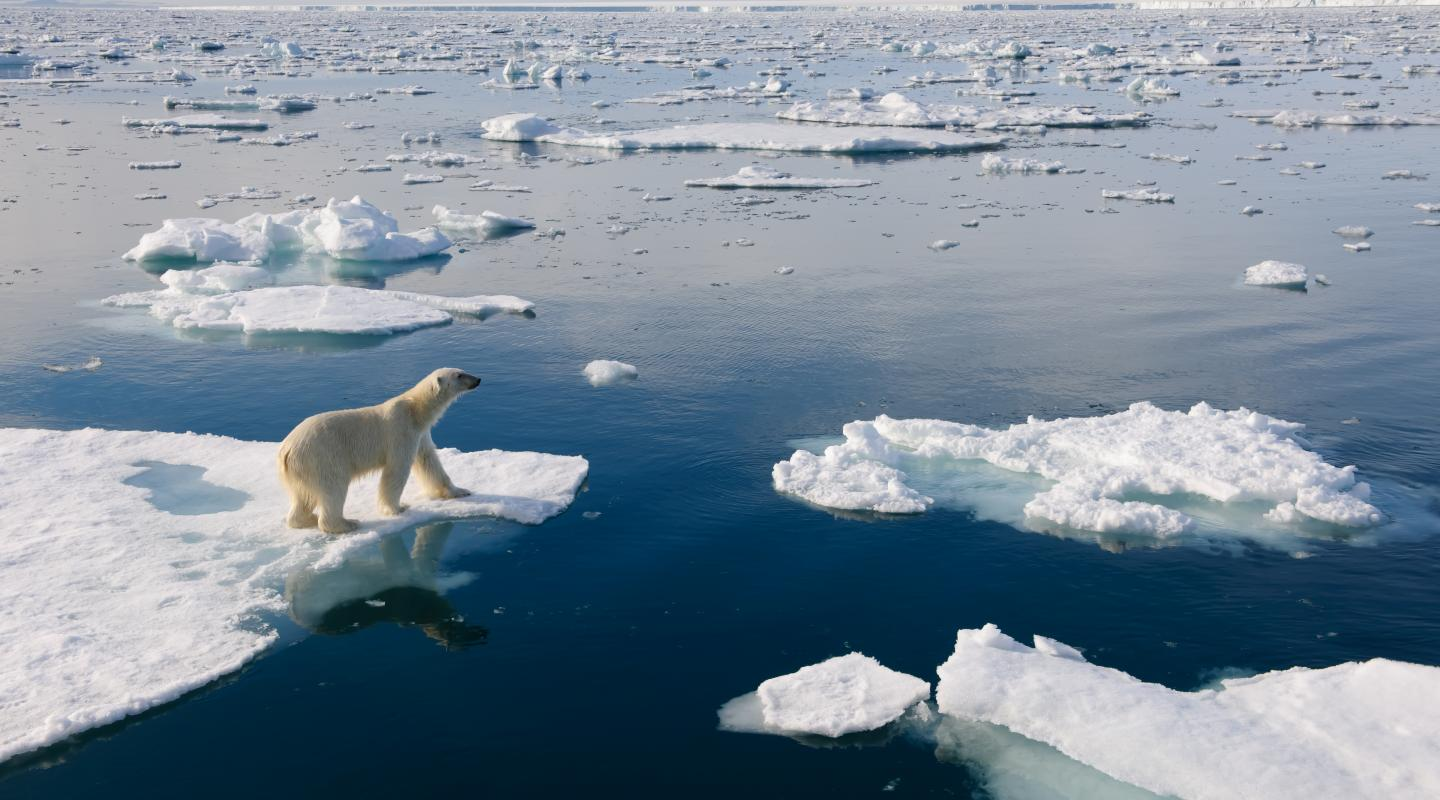 photo: Florian Schulz/visionofthewild.com
1. POLAR BEARS ARE CLASSIFIED AS MARINE MAMMALS
Because they spend most of their lives on the sea ice of the Arctic Ocean depending on the ocean for their food & habitat, polar bears are the only bear species to be considered marine mammals
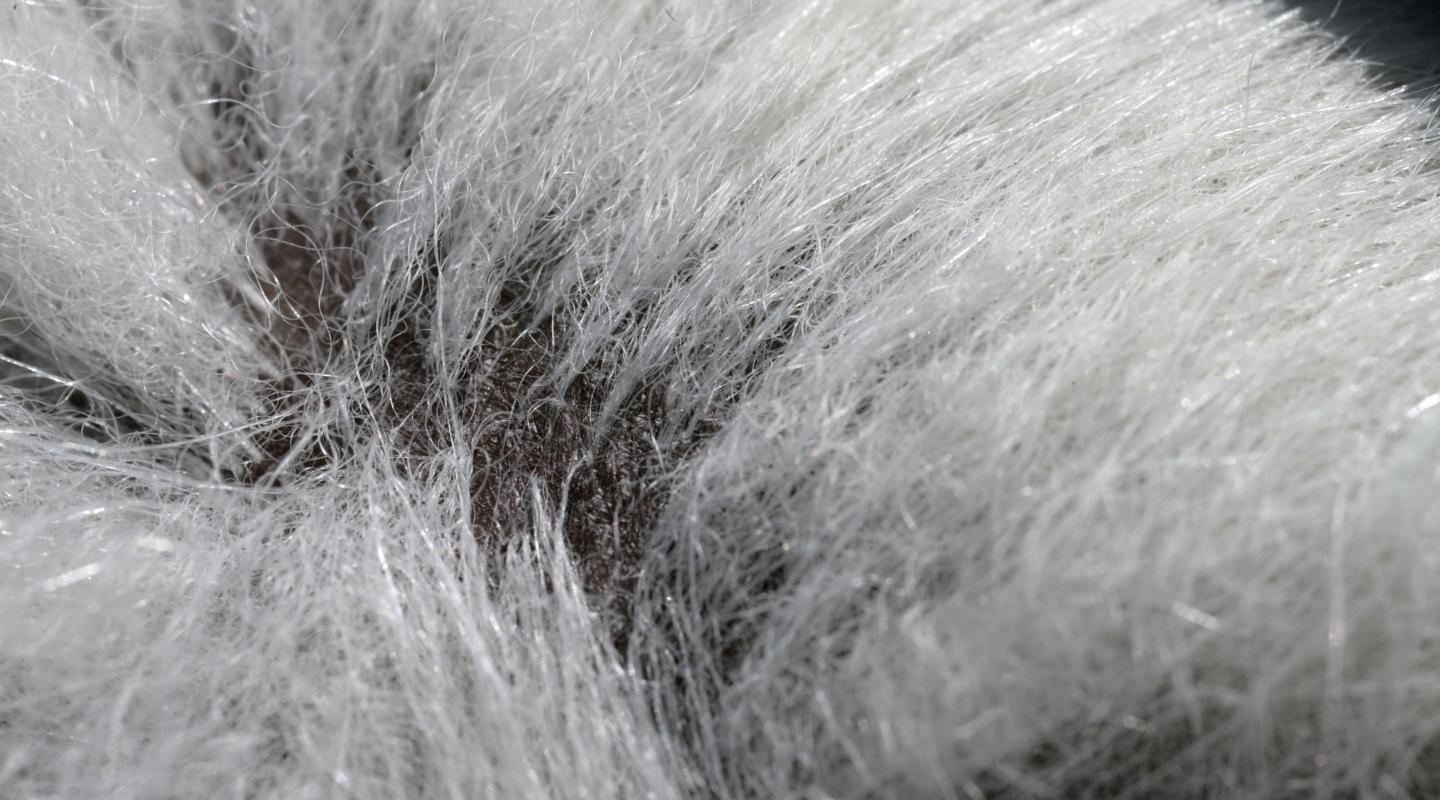 photo Jon Aars/Norwegian Polar Institute/WWF-Canon
2. POLAR BEARS ARE ACTUALLY BLACK, NOT WHITE
Polar bear fur is translucent, and only appears white because it reflects visible light. Beneath all that thick fur, their skin is jet black.
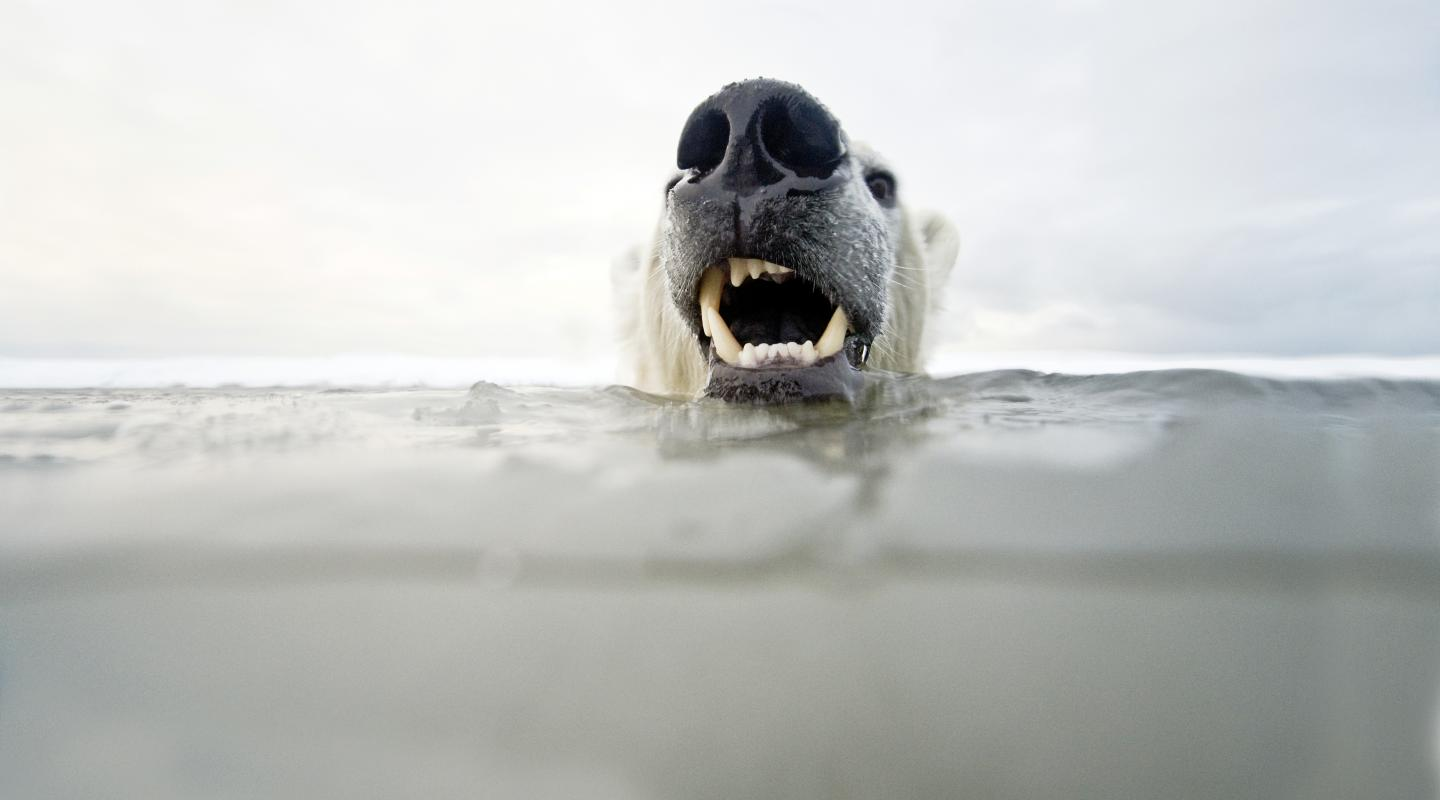 Photo: naturepl.com/Steven Kazlowski/WWF
3. THEY CAN SWIM CONSTANTLY FOR DAYS AT A TIME.
As well as reaching speeds of up to 6mph in the water, polar bears can swim for long distances and steadily for many hours to get from one piece of ice to another.
Their large paws are specially adapted for swimming, which they'll use to paddle through the water while holding their hind legs flat like a rudder.
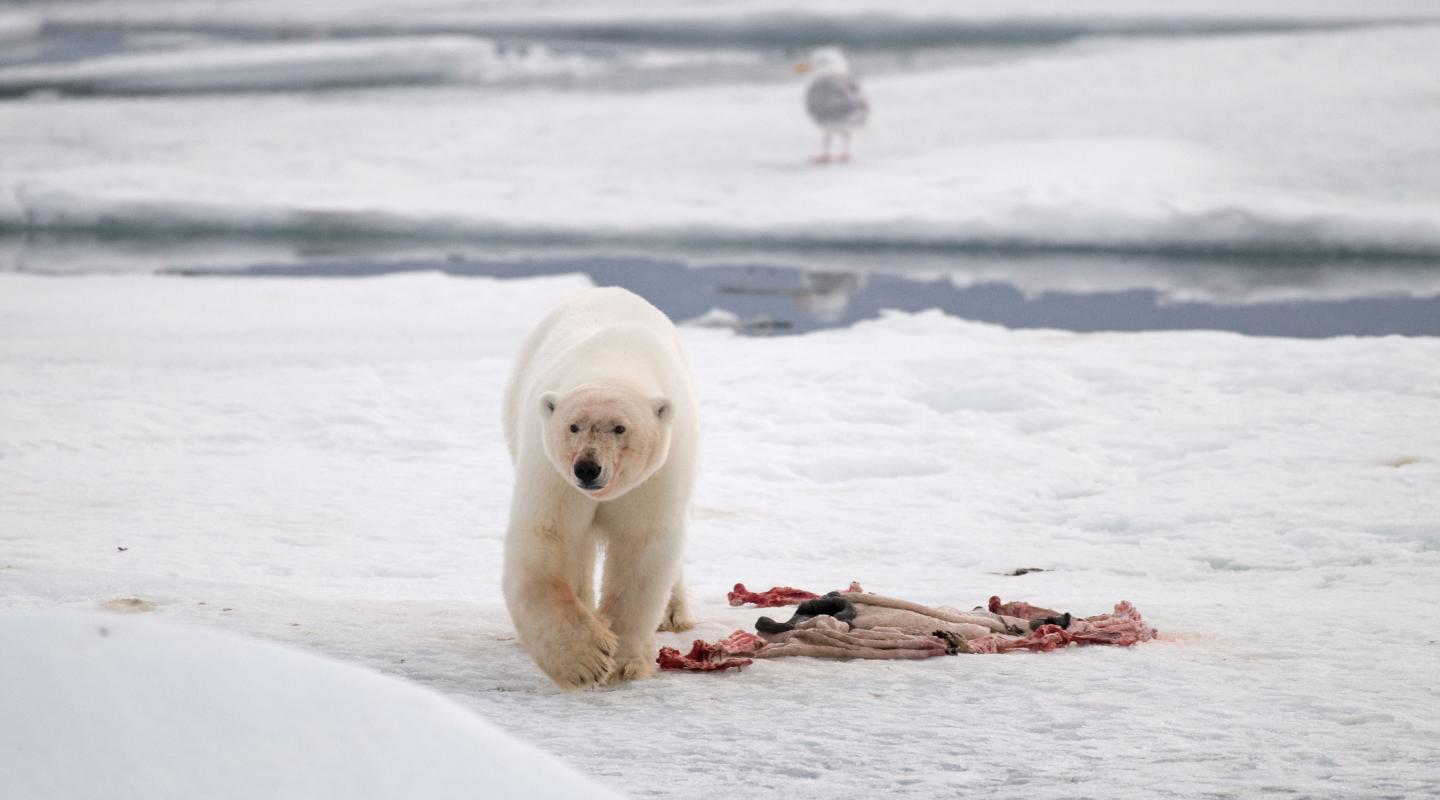 photo: Steve Morello/WWF
4. LESS THAN 2% OF POLAR BEAR HUNTS ARE SUCCESSFUL
Although about half of a polar bear's life is spent hunting for food, their hunts are rarely successful. Polar bears main prey consists of ringed seals and bearded seals,
though they will scavenge carcasses or settle for small mammals, birds, eggs, and vegetation
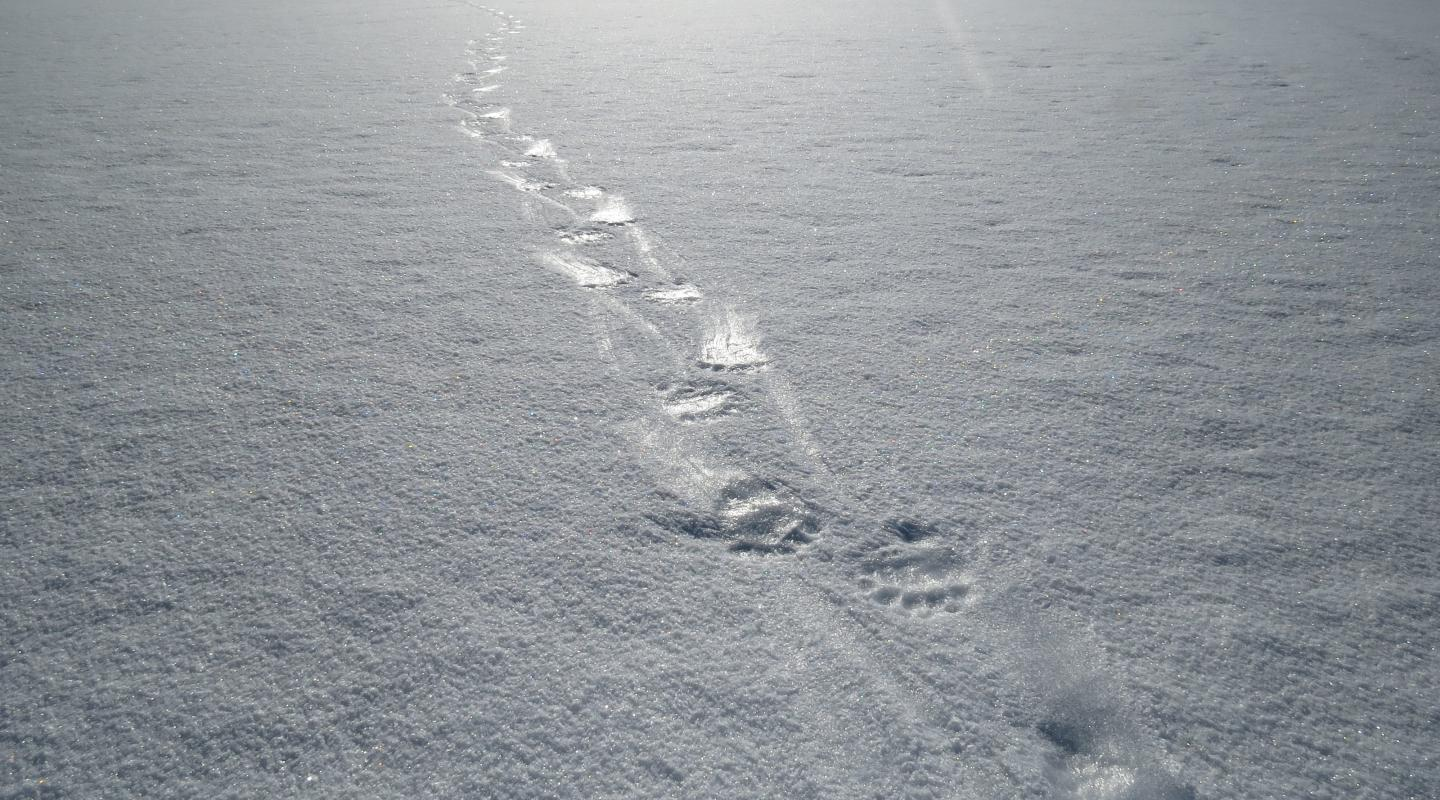 photo: Public Domain
5. SCIENTISTS CAN EXTRACT POLAR BEAR DNA FROM JUST THEIR FOOTPRINTS
an innovative new technique developed by WWF and DNA specialist firm SPYGEN allows scientists to isolate DNA from a polar bear's footprint in the snow.
Two tiny scoops of snow from a polar bear track revealed not just the DNA of the polar bear that made it, but even from a seal, it had recently eaten.
 photo from WWF.org Website
6. THEY FACE MORE THREATS THAN CLIMATE CHANGE
While climate change remains the greatest threat to the polar bear's survival, that is not all that the predator is up against. The oil and gas industry is turning its eyes to the arctic, and with it comes potential risks of habitat destruction from oil exploration work. Contact with oil spills can reduce the insulating effect of a bear's fur requiring them to use more energy to get warm, and can poison them if ingested. Polar bears can also be exposed to toxic chemicals such as pesticides through their prey, which can affect a bear's biological functioning and ability to reproduce.
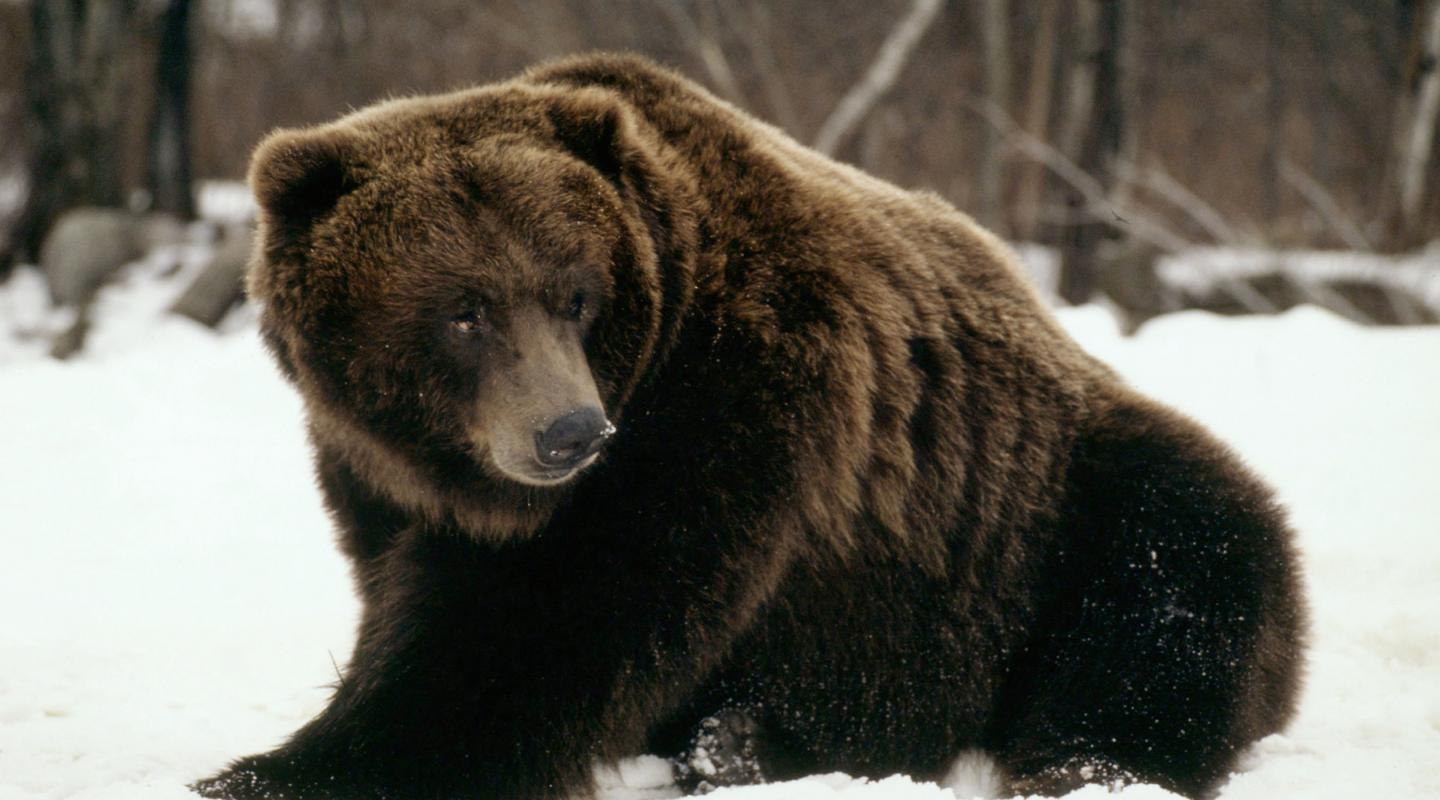 photo: Klein & Hubert/ WWF
7. GRIZZLY-POLAR BEAR HYBRIDS EXIST
As recently as 2006 genetic testing confirmed the existence of polar bear-grizzly bear hybrids, also known as 'grolar bears' or pizzly bears'. The hybrid physically resembles an intermediate between the two species, but as wild hybrids are usually birthed from polar bear mothers they are raised and behave like polar bears. The ability for polar bears and grizzly bears to interbreed is unsurprising when you consider that polar bears evolved from brown bears as recently as 150,000 years ago.
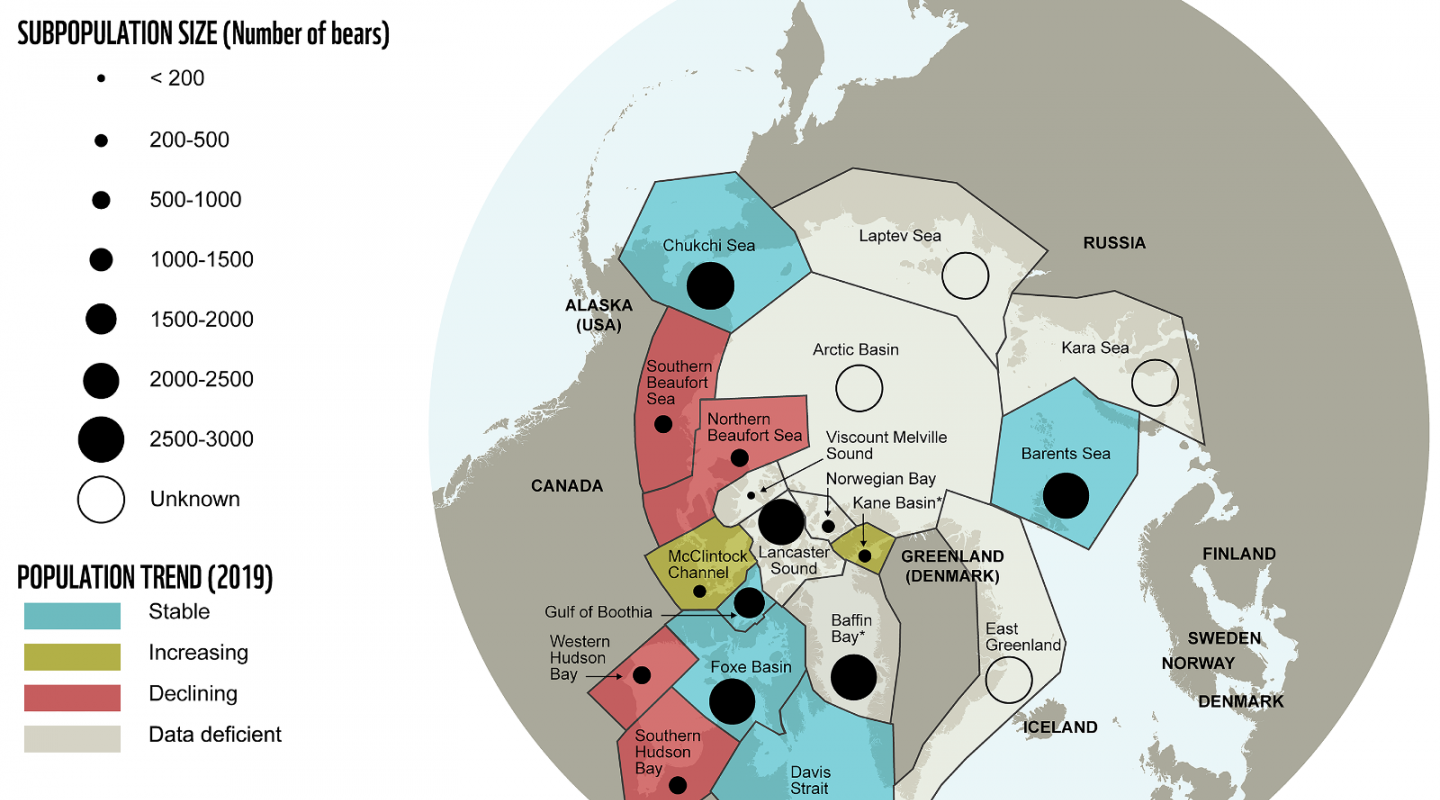 image: WWF-Canada
8. THERE ARE AS MANY AS 19 SUBPOULATIONS OF POLAR BEAR
The total population of approximately 26,000 wild polar bears is divided into 19 units or subpopulations, of these just 1 subpopulation is increasing, 5 are stable and 4 are in decline. The remaining 9 have not been assessed as they are data deficient. - we simply do not have enough information about them to know how they are doing.
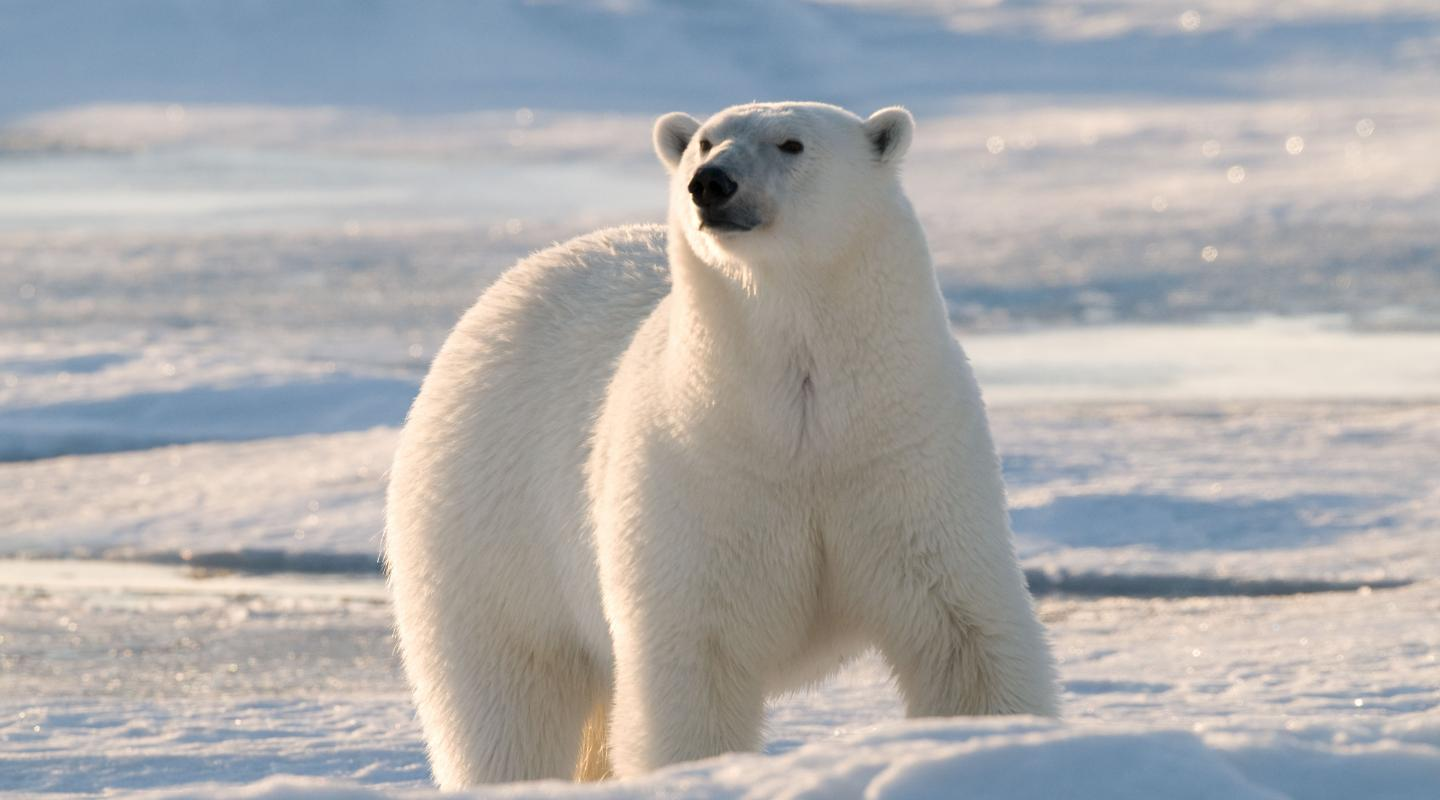 photo: Steve Marello/WWF
9. MALE POLAR BEARS CAN WEIGH AS MUCH AS 10 MEN
Male polar bears can weigh up to 800kg and are twice the size of females. This, in addition to the fact that they can measure up to 3 metres long, making polar bears the largest land carnivore in the world.
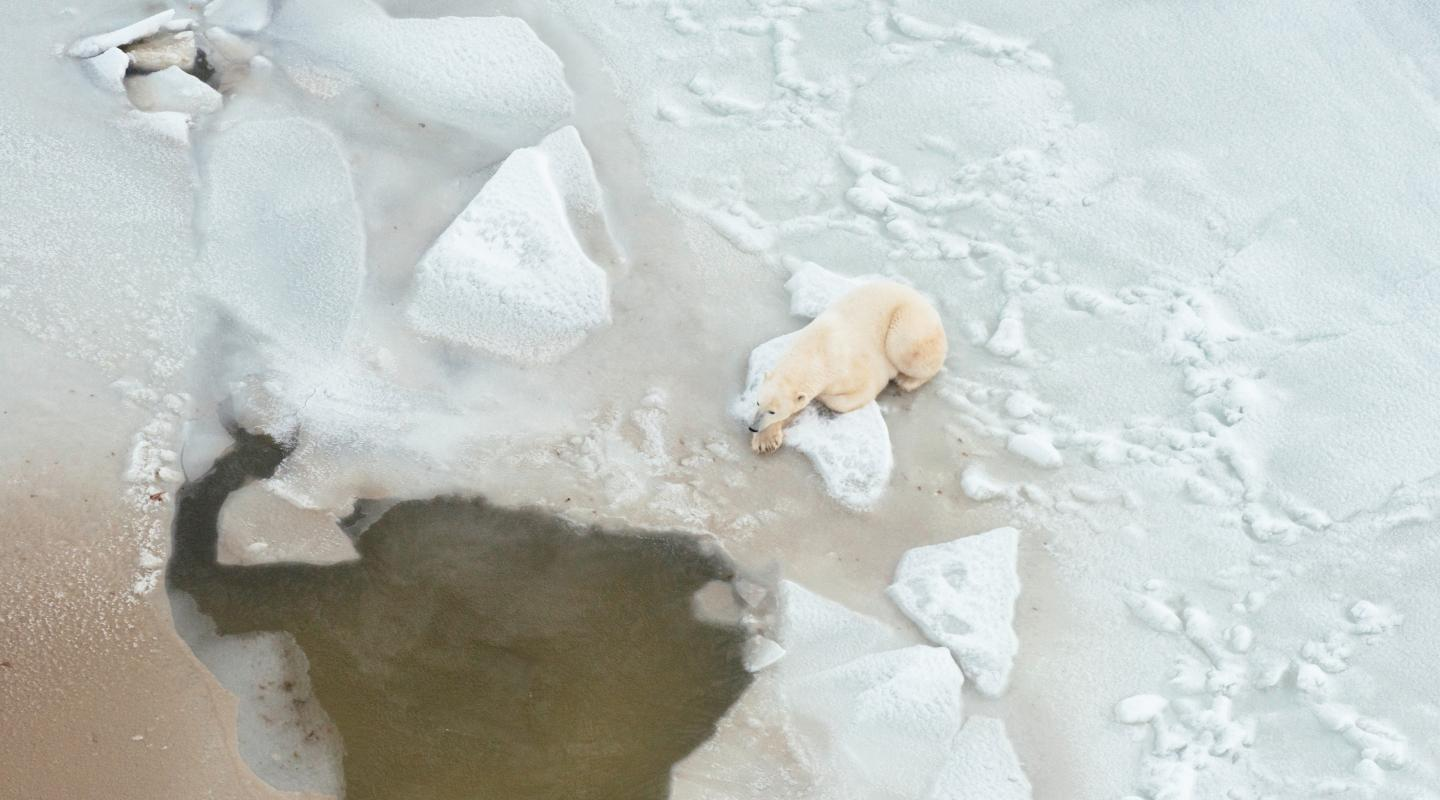 photo WWF-US/Elizabeth Kruger
10 THEY CAN SMELL THEIR PREY UP TO A KILOMETER AWAY
Polar Bears have a very strong sense of smell, which they use to find seal breathing holes in the ice. Once it has found the hole, the bear will wait patiently until the seal comes up for air to attack. They can even detect a seal in the water beneath a metre of compacted snow.
PLEASE ADOPT A POLAR BEAR AT support.wwf.org.uk
Other cool facts about Polar Bears:
They can overheat when in running in the summer and when temperatures rise above freezing.
The clean themselves by rolling in snow.
They can reach speeds of up to 25 mph on land and swim 6mph.
They can live up to 30 years
A female polar bear will have an average of 5 litters of cubs her lifetime
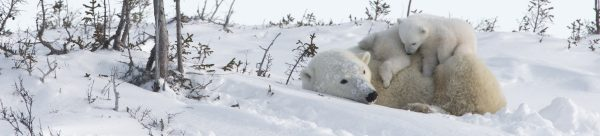
SAFARI TRIPS TO SEE POLAR BEARS!
Polar Bear Mother and Newborn Cubs – March
Spring Polar Bears of Baffin – March & April
Narwhal and Polar Bear Safari – May & June
Polar Bears and Glaciers of Baffin Island – August
Polar Bear Migration Fly-In Photo Safari – October & November
Polar bears communicate through body language, vocalizations, and scent markings:
Head wagging from side to side: A sign that polar bears want to play. Adult bears initiate play—which is actually ritualized fighting or mock battling—by standing on their hind legs, chin lowered to their chests, with front paws hanging by their sides.
Nose-to-nose greetings: How a bear asks another bear for something, such as food. The guest bear will approach slowly, circle around a carcass, then meekly touch the feeding bear's nose.
Chuffing: A vocal response to stress, often heard when a mother bear is worried for her cubs' safety.
Scolding: Mother bears scold cubs with a low growl or soft cuff.
Rushing: When a male approaches a female with cubs, she rushes toward him with her head lowered.
Hissing, snorting, lowered head: Signifies aggression.
Loud roars or growls: Communicates anger.
Deep growls: Signifies a warning, perhaps in defense of food.
Charging forward, with head down and ears laid back: Attack mode.
Moving downwind of dominant bears: Signifies submission.
TO KEEP UP TO DATE ON POLAR BEARS WE RECOMMEND YOU BOOKMARK:
https://polarbearsinternational.org/
The shameful War against
Wolves in Sweden and Scandinavia
Questionable and
partly biased background information concerning the present wolf slaughter in
Sweden 2022,
by Eva Stjernswärd
Painter
artist
Board member of NGO
Jaktkritikerna (Hunting Critics) and Dris (Animal’s Voice in Society) against
licensed hunting in Sweden.

KA
The current hunt in 2022 is more cruel than usual as the different
local County Boards are cooperating to eradicate whole wolf families from their
territory and habitat. Norway (A non EU-country where the hunt for 54 wolves
can go on until 31st of May) and Sweden are cooperating with each
other in this grotesque extermination, creating a wolf holocaust. On the
Swedish side nearly 2 000 hunters have registered to kill 27 wolves.
Finland will also started a hunt for 18 wolves on February 1st. So in Scandinavia more than 99
wolves will be slaughtered in the most gruesome ways in 2022.
Wolves and other predators were almost eradicated because of human
persecution toward the end of the 19th century. In the early part of
the 1900’s, the romanticism of nature as well as people moving in to urban
areas helped to awaken an appreciation of a diverse fauna. Even the hunter’s association
helped to protect certain species. But unfortunately in the late 1930’s the
hunters association was nominated by the state to be responsible for wild life
management and they were granted huge economic resources, which coupled the
state and hunting interests, copied from a model then being utilized in
authoritarian Germany. This model is still valid and renders them a budget of
approximately 5.6 million dollars each year. This has created an institution that
exerts control over wild life as well as being a lobbying force infiltrating
the government and the political agenda for hunting on all levels. This is despite hunters only representing
less than 3 % of the population.
Why is there trophy hunting in
a developed country like Sweden?
Wolves were completely
protected from 1966 to save the species. But as we can see this has changed in
spite of being under the EU protection laws when Sweden agreed to enter the EU
in 1995. As from 2010 licensed hunting has escalated trophy hunting in Sweden,
as hunters can now kill bears, lynxes and wolves. Foreign hunters are welcomed
too. The Swedish Environmental Protection Agency changed its strategy of wild
life management in favor of hunters after a string of political changes from
the end of the 1990’s. This escalated when hunters decided that predators,
especially wolves, should be viewed as competitors for other game that they
were hunting! This had a negative impact on all wild animals, but for predators
in particular, as they were politicized.

very unlike its cultural heritage and is now an industry with export ambitions. Not to mention the
extreme cruelty with which farmers are allowed to handle reindeers (Not as Nature intended – A book by
undercover journalist Rich Hardy). These semi-wild animals are transported to
slaughter houses in masses. Snowmobiles and helicopters are used to round the
animals up under stressful conditions. Although climate change is more of a
threat than predators, enormous financial support from the state keeps this
cruel business alive.
There is huge
financial support to reindeer owners/villages from the state to “accept” the
presence of predators in their land, as well as payment for each of their animals
taken by predators. However, this in no way protects the predators from
ultimately being killed. On the contrary; this has been proven by the increase
in so called protective hunting as well as illegal hunting. For wolves, this is
a lethal problem in additional ways; as the only path to genetic renewal actually
comes from Finland and Russia. No wolves survive if they enter Sweden. The hate
of wolves has become pathological when not even “stately bribes” can save them.
In some regions it’s like a reminder of the witch hunts that took place against
women in the seventeenth century.
The debate about the
degeneration in Swedish wolves has been unsuccessful in achieving any more
protection for them than other than token numbers.
In 2016 the Supreme
Administrative Court ruled that 300 wolves must be the minimum for conservation
of the species. Instead of this being a minimum - it is used as a maximum of
tolerance by the EPA and the hunters. Biological and scientific proof does not
help. The legal system is basing its judgement on this, which in general leave
the NGO’s appeal with hardly any success in saving individuals. The European
Commission has an open case against Sweden’s wolf hunt but nothing concrete has
been achieved yet.
Sweden’s repetitive
violation of the EU’s Habitats Directive continues and by customizing its own
national loop holes and interpretation of the exception rules for limited
hunting, Sweden is also undermining the aim and purpose of the Convention on
International Trade in Endangered Species, CITES, as export permits for all
trophies is easily granted by the Agricultural Board. On this note, its worth
mentioning that Swedish government refused to take up the ban on import of
trophies from canned lion hunts in 2016/2017, which would have been a low
hanging fruit. Unfortunately it shows that most politicians in all parties are
not at all engaged when it comes to animal protection, and definitely when
hunting is concerned.
Despite the Covid
pandemic the mink industry and industrial farming of pigs and chickens prevails
in horrible conditions in Sweden.
More than 7 000 red
listed predators have been killed in 20 years

K.A.
The Swedish
Environmental Protection Agency (EPA), Naturvårdsverket,
has even increased the quota for legal trophy hunting. Since the year 2000 more
than 7 000 brown bears, lynxes, wolves and wolverines have been killed
legally in this system.
have an estimated 2 800 brown bears, not much over 1 000 lynxes and perhaps
600 wolverines. This is in a country with a low density of people in the areas
where predators naturally have their habitats. But predators have become chess
pieces on the political agenda. This polarization is based on predator conflicts
locally by hunters, livestock owners, reindeer keepers and of course the economic
interest groups behind them.
The system of
monitoring and counting wolves is done by local authorities and hunters. As the
wolf is considered not only to be a threat to livestock but as a competitor in
the hunter’s quest for wild game – it’s easy to conclude that the hunters want
to demonstrate as high a count of predators as possible.
In addition, humans
are diminishing predator’s territory in general, with exploitation of land for
livestock, especially the huge areas in northern Sweden where reindeers are
kept roaming free.
Wolf population
The number of wolves
is always debated and questioned as illegal hunting still counts for 10-20 %. When
the counting of individuals is done (1st October to 1st
March) these wolves as well as the animals killed in accidents or for other
reasons (killed in livestock conflicts for example) after this date, are not
accounted for. This means that wolves killed after 1st March and
until the following autumn, that is several months after, when the hunting decisions
are being made are not included! Some believe that there could therefore be
even less than 300 wolves.

K.A.
The “precautionary principle” is not a Swedish forte
When it concerns
bears, wolves and lynxes, the “precautionary principle” is largely ignored.
The official number given
was 395 wolves when the authorities took the decisions to kill 27 to 33 of them
in 2022. Some local counties are even trying to extend the areas to be sure to
kill wolves that are trying to flee. This is what can happen on the border to
Norway (involving administrative boards in Dalarna, Värmland and Jämtland) and
it is repeatedly happening in the county of Gävleborg. Legally it should not be
allowed to change or extend hunting areas that were initially drawn up when the
decisions was made, in November/December. But the local administrative boards
of the mentioned regions above – are hard liners against predators, as are all
the northern regions. We do not know yet what the courts will say.
alarming - is the inbreeding and degeneration in Swedish wolves.
Many male wolves have
only one testicle (cryptorchidism) and autopsies of killed wolves show cruel
proof of hunters sadism – many have old wounds and lead ammunition in their
bodies.
killed against the EU directives for protection of species. Labeled
license hunting and/or protective hunting
Both methods have increased since 2010. The
Swedish Environmental Protection Agency has delegated the decisions to local
government boards in each county that houses predators. The protective hunting
orders are often given over the phone and mostly the animals are permitted to be
killed the same day. The time to challenge the decisions by NGO’s is therefore futile
and purely symbolic. These hunts are fast executions done by helicopter and snowmobile.
On the ground dogs are utilized to track them down if they try to hide in dens.
The heli-hunts might be inspired from American war-fare…and also what is
happening now in the US. Sadly these methods spread like a pandemic due to
globalization and hunters’ international organizations. Historically, Americans
started shooting African game from trains and cars in the era of the white hunters, also the time of the
Swedish baron Blixen (husband of author Karen Blixen) who guided all the rich
and famous on trophy hunting and killing tours in Africa.
So cruelty still takes
its toll in Sweden. Females with young are not spared. For example wolverine
females with cubs are permitted to be killed in their den. Female lynx with
cubs are killed from helicopter and the “ethics order” is to kill the
“children” before the mother…
The licensed hunt for
lynx takes place from 1st of March – which is the mating season of
the shy felines. A real crime! Our Nordic Leopard!
abuse does not include wild animals – only hunting laws are applied.
Swedish hunting laws
are based on the use of animals as objects - owned by the hunter and/or
landowner. State land/forests are also leased for hunting and its big business,
as well as for all the agricultural farmers who lease the right to hunt on
their land. Wild life has no respite. Not even in a National Park or nature
reserve, where EPA permits hunting. The sea is also a hunting ground and EPA is
extending hunting every year on all species of seals, even the very threatened
red listed species in the northern Baltic Sea.
self-assessed killing action
Legislation allows for
killing predators in situ, as a prevention method to stop an attack. This of
course is used without control from authorities and it can’t be excluded that
dogs often provoke bears for example, while hunting other game. And the most common argument from hunters is
that dogs are killed by wolves and that they cannot hunt elk as freely as they
want with loose dogs.
Needless to say, loose
dogs in wolves’ habitats should be prohibited – a NO GO.
Since 2010 this legislation
has been used with an alarming increase as the “excuse” to kill bear, wolves
and lynx. Very few cases lead to investigation and are annulled due to lack of
proof. The issue of animal abuse when killing a female bear for example (and
then discovering two cubs hiding in trees) or parental wolves leaving pups is
never punished or even discussed.
and the frequent wounding by hunters or dogs is never punished.
Cruel hunting with dogs
Pack hound hunting has
developed in Sweden and is becoming animal abuse for both dogs and wild animals
that is not addressed at all. Swedish hunters have also introduced new type of
aggressive hunting dogs, which are trained on predators. The Swedish
Environmental Protection Agency (EPA), mainly responsible for wild life and
hunting issues, has extended the rights to hunt with loose dogs – 3 dogs are
allowed to chase 1 wolf, it doesn’t matter whether a puppy or adult. The non-ethical
hunting methods also include old medieval ways of hunting with beaters and circling
the environment with “scary wires with moving textiles”, set up to enclose the
fleeing wolves and force them towards the hunters.

Shutterstock
Training of hunting dogs in
the wild on predators in their habitat
The worst is that EPA
has introduced even more vile techniques – namely that all hunters can train
their dogs one month before the official hunting starts! Even in areas of
Sweden where the licensed hunt will not be granted.
This means training on
wild bears (with their cubs) in their habitats begins from July-August (hunt
starts 21st August), on wolves in December (hunt starts 2nd
January) and lynx in February (hunt starts 1st March). It is also
permitted to train dogs on captured wild animals in special training centers.
This sadistic practice is not addressed by the EPA, even though many protests
are heard from NGO’s. Simultaneously hunting with dogs terrorizes other
wildlife, like hunting for boar that is permitted nearly all year round as well
as nighttime.
Sweden’s hunting lobby
is firming its grip on all wildlife and the legal system for hunting is rigged.
To spin the wheel of death the Swedish Environmental Protection Agency has
liberated hunting even more on all animals, including migrating birds like
cranes and swans with a renewed decree from 2021 to 2026! Be sure to watch the interview at https://www.mojostreaming.com/video/677/crisis-facing-wolves-in-scandinavia-a-panel-discussion

KA


Winner $500 (USA) and Cover: Neel Sureja

A finalist that will be featured in the calendar - above photo by Neel Sureja

A finalist that will be featured in the calendar - above photo by Neel Sureja

A finalist that will be featured in the calendar - above photo by Neel Sureja

A finalist that will be featured in the calendar - above photo by Trevor LaClair

A finalist that will be featured in the calendar - above photo by Trevor LaClair

A finalist that will be featured in the calendar - above photo by: Trevor LaClair


A finalist that will be featured in the calendar - above photo by: Josephine Tyler

A finalist that will be featured in the calendar - above photo by: Shiva Kumar

A finalist that will be featured in the calendar - above photo by: Shiva Kumar

A finalist that will be featured in the calendar - above photo by: Shiva Kumar

Please take the time to explore and learn more about our winners and their talent.
wildlife-film.com Trevor LaClair
gp-photography.ch Giovanni Pelloni
josephinetylerphotography.co.uk Josephine Tyler
neelsureja.com Neel Sureja
thejungledairy.com Shiva Kumar
interiorsafarisea.com Tumwesugye Elasmus Godfrey