‘The Tribe Endangered’ No. 1. George
Where’s George today?
Elder statesman of the tribe
Perhaps its long-lived Chief
George we’ve already introduced
In another verse, but here he is again
Unknowingly enjoying his fame
He lives his life on a beach
An Atoll called Cousins
At a giant tortoise pace
Aldabra Giant Tortoise
Aldabrachelys Gigantea
Lumbering around
In his mobile helmet home
OK, because that’s what he is
And that’s what giant tortoises do
The same driving rules as us all
Hunger and passing on genes
Links in an unbroken chain
But his cousins had theirs broken
Eaten out of house and home
By historically hungry sailors
Only Aldabras remain, like George
But what’s in a name ?
A being worthy of living a life
Left to his own devices
Doing what giant tortoises do
Looking at the sea and sky
Searching for today’s meal
Or a rather attractive slow-walking rock
Hiding away when it gets too hot
More than a hunk of a ‘living rock’
Who likes to break things*
Plodding around for longer than us
Living more than a hundred years
Some even two or longer
That’s George’s life
On his island paradise
His home long before they were known
As the Seychelles
(Now open again)
George and his kind
Are not strictly endangered
Just limited in numbers and range
George is safe when tourists are around
Contributing to upkeeping his home
On YouTube amusing some of them
Going into battle with a rival table
Or a pretender barbecue
Upstart, to be upturned
Or was that just an amorous advance?
Either way, short-sighted at a glance
Visiting his island keeps him in home
He carries his own house
Then visitation dried up interminably
That story can’t be told in one line
Just now begins the trickle back
Only two threats now are known
Drip feeding of existential funding
Or any change to his home
Just this little change of climate thing
That threaten his shores, not alone
George may well outlive us
But right now he needs help directly
Your money is your proxy
Keeping the conservation going
Until you can greet him personally
It’s up to the rest of us in our homes
To ensure his home remains
An Atoll
Above the sea
For George to keep doing his thing
Master and Commander of his islandship
Defender of the realm of living rocks
Legend in his Aldabran mind
So remember to mind your table!
A.E.(Anthony) Lovell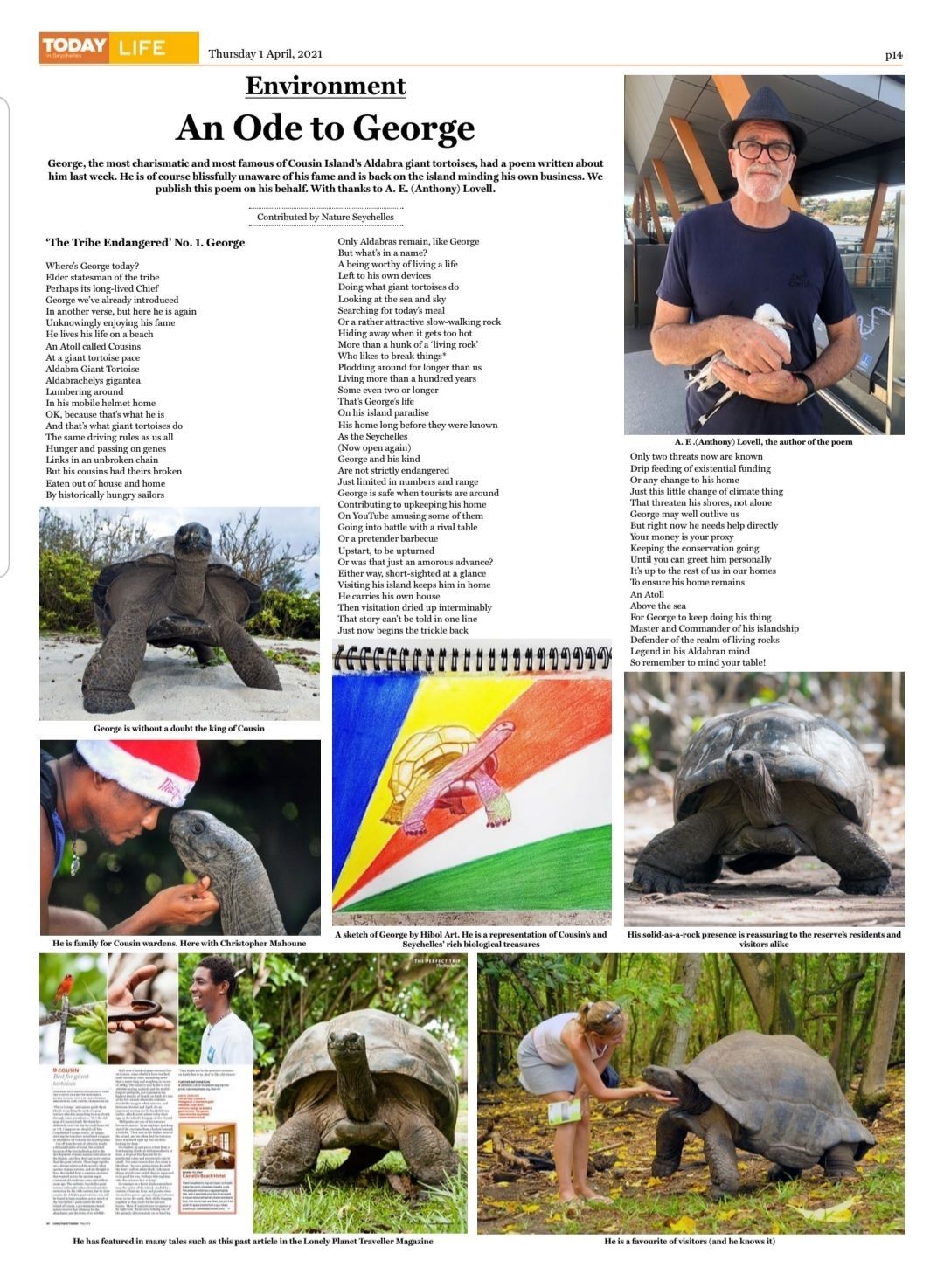
FUN FACTS FRIDAY- VERVET MONKEY
1. They spend almost their entire life on the trees (arboreal animal). They are proficient climbers and jumpers.
2. They are omnivores (they eat both plants and meat). Their diet is based on leaves, buds, shoots, flowers, fruit, roots, insects, eggs, grubs and small birds.
3. They usually breed from April to June. Pregnancy in females lasts 165 days and ends with one baby.
4. They communicate through sounds and body language. A raising eyebrow is meant to be a threat to others in the troop. There are also vocalizations like crying and barking to signal different information. Wanting calls are used by mothers to attract infants while chattering signals irritation or aggression.
5. During mating season the males testicles turn bright blue, a flamboyant show to suggest their suitability as a mate.
If you want to learn more about this animal,Contact Godfreytheguide for more information.
WhatsApp/ call - +256773127086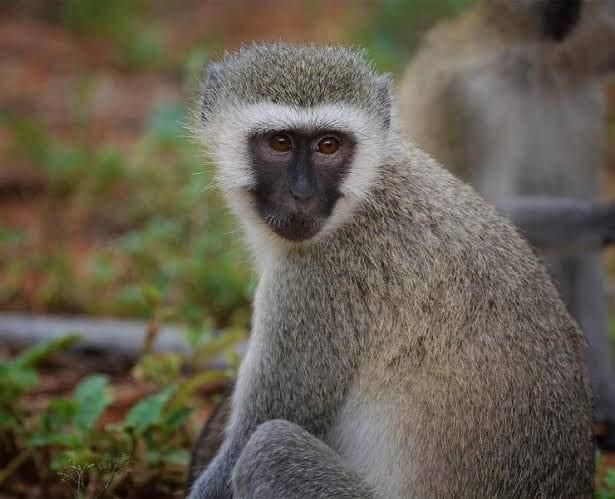
So you want to go mountain gorilla trekking ! It’s an awesome idea! We’ve been, and we can tell you that it’s definitely, absolutely, positively worth it. It's one of Our favorite things to do in Uganda . Standing just a few feet from these gentle giants in their forest habitat and seeing them munch on fruits and plants, play with or groom one another, and idly look at the curious bipeds looking at them – these are magical moments that stay with you for a lifetime. But to get to be in that special place, you first must decide where to go to see them. Do you want to go gorilla trekking in Rwanda? Or do you want to go gorilla trekking in Uganda? Well, answering that question is what this blog post is all about.
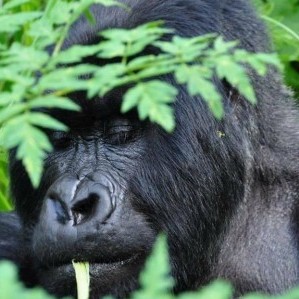
An adorable infant gorilla snacking on a shoot
Trekkers visit habituated mountain gorillas
The mountain gorillas that visitors trek to see are those that have become habituated to the presence of humans. The process of habituating them to humans takes about 2 (two) to 5 (five) years. But even though they become used to the presence of humans, there are still strict rules in place to ensure we interfere as little as possible with their habitat and way of life.
For starters, only one group of eight people is allowed to visit each gorilla troop per day, and then only for one hour. Other rules, as discussed in 20 things to worth knowing about mountain Gorilla Trekking include not making loud noises or sudden movements while in their presence.
Where can I go gorilla trekking?
All of the world's mountain gorillas live in the Virunga Mountains of Central and East Africa. The two main countries for gorilla trekking are Rwanda and Uganda. In Rwanda you can trek to see mountain gorillas in Volcanoes National Park. In Uganda, you can visit mountain gorillas in Bwindi Impenetrable National Park or Mgahinga National Park. The gorilla population in Mgahinga isn’t as large and steady as that of Bwindi, making the latter the better and more popular option.
The decision to go gorilla trekking in Rwanda or Uganda usually rests on factors like cost and accessibility. You also want to consider what else you’ll do on your trip to the country, as the cost and effort of a gorilla trek means you’ll likely only be seeing gorillas on one day. We discuss all these matters in just a moment, but first, let’s answer a very important question .
The mountain gorillas of Rwanda
Rwanda is a small and mountainous East African country with a population of around 14 million people. It’s sometimes called the pays des mille collines, which is French for ‘land of a thousand hills’. The main language in the country is Kinyarwanda, spoken by most citizens. English, French and Swahili are also official languages.
Rwanda is a phoenix of the twenty-first century, having risen out of the ashes of its tragic 1994 genocide to become one of Africa’s great success stories. It’s capital city of Kigali is well-known for its beauty and cleanliness. In fact, did you know that’s illegal to buy, use or sell plastic bags in Rwanda?
Volcanoes National Park
Tourism has played a major role in helping Rwanda to rebuild itself, and mountain gorillas are at the heart of its tourism trade. As mentioned, Rwanda’s mountain gorillas live in Volcanoes National Park. There are about 56 mountain gorilla troops in the park.
As Rwanda is a small country, getting to Volcanoes National Park is a relatively easy affair. Visitors simply fly into Kigali International Airport and then it’s a short drive of about two and a half hours northwest to arrive at the doorstep of Volcanoes National Park. Even though the drive is short, it’s always advisable to travel with a reputable tour operator who knows the region and roads well. The proximity of Volcanoes National Park to an international airport is a major draw for Rwanda’s mountain gorilla tourism industry.
Gorillas are social animals who live in troops their whole lives
The mountain gorillas of Uganda
Uganda is a landlocked country consisting of massive plains, volcanoes, snow-capped mountains, thick forests, savannah, immense lakes, diverse wildlife and more. The population of about 45 million is extremely diverse, and speak more than 50 languages. Ugandans are known for their warmth and friendliness. It’s also important to note that Uganda is considered to be the best English speaking country in the whole of Africa, which is very helpful for tourists.
Bwindi Impenetrable National Park
Most of Uganda’s mountain gorillas live in Bwindi Impenetrable National park. Bwindi is an alpine forest that sits between 1,160 m meters and 2,607 meters above the sea level. As the name suggests, the Bwindi Impenetrable National Park encompasses a thickly forested area. Given the density of vegetation, it can be pretty dark in the forest. It’s a UNESCO World Heritage Site, and rightly so.
If you look at the map of Uganda below, you can see that Bwindi Impenetrable National Park is in the extreme southwest corner of Uganda. This places it decently far from the capital city of Kampala and Entebbe International Airport, both of which are in south central Uganda. Moreover, the roads connecting the two aren’t smooth, open highway. So the drive takes about nine hours. It’s advisable that you travel with someone who knows the region rather than road tripping on your own.
Map showing tourist attractions in Uganda
While you can take a short flight from Entebbe to Bwindi, driving is a cheaper option, especially as part of a tour group. Some who want to go to Bwindi for gorilla trekking actually choose to fly into Kigali, Rwanda’s capital city, and drive north across the border, as this is a shorter drive that lasts about four hours.
It takes longer to reach Uganda's Bwindi Impenetrable National Park than it does to reach Rwanda's Volcanoes National Park.
Get your free Uganda guide!
Everything you need to know about Uganda .
Trekking prices in Rwanda and Uganda
The first major difference is the price of the gorilla trekking permits in Uganda and Rwanda. Rwanda chose to implement a low tourist policy with high impact, so they charge $1,500 for a gorilla trekking permit. Uganda on the other hand chose to set its permit price at $700 for a gorilla trekking permit. This makes trekking to see the Mountain gorillas in Uganda much cheaper. There are many more luxury lodge options in Rwanda than Uganda, but there are a range of mid-range and luxury accommodations in Uganda too.
Accessibility of gorilla parks in Rwanda and Uganda
Given the relatively close proximity of Volcanoes National Park to Kigali Airport, Rwanda is the better country for visitors who only have time for a brief stopover to go gorilla trekking, and nothing else. This is more likely to be the case for those in transit to somewhere else, or travelling in from a nearby country.
For most foreign travellers, however, the time and expense put into getting to East Africa means they want to do more activities while in the region, like go on safari or climb Kilimanjaro. For such travellers, Uganda is the better option as it has more to offer. But more on that in a moment.
Trek conditions in Uganda and Rwanda
Trekking routes in Rwanda are considered a bit more open and not as steep and slippery compared to Bwindi In Uganda. That said, Volcanoes National Park is at a much higher altitude than Bwindi and this can also make the trek more challenging.
Uganda has more habituated mountain gorilla troops
Note too that while it’s easier to reach Rwanda’s mountain gorillas, Uganda has more habituated mountain gorillas and so admits more trekkers per day. About 80 people a day are allowed to visit Uganda’s gorillas. In Rwanda, the number of daily visitors is about 56. This makes obtaining a gorilla trekking permit in Uganda a little easier than obtaining one in Rwanda, especially if you aren't booking very far in advance. Read about our http://interiorsafarisea.com/experiences/
Trekkers get close enough to look into the eyes of the mountain gorillas
“I just came back from an amazing 14-days trip to Uganda with Follow Alice, and I strongly recommend them. This was my second experience with Follow Alice, and just like the first trip, everything was flawless.
Gorilla habituation permits in Uganda
Something on offer only in Uganda is the gorilla habituation permit. This permit allows the visitor to spend fourhours with a mountain gorilla troop in the south of Bwindi Impenetrable National Park. The habituation permits costs $1,500, which is the same price as the one-hour gorilla trekking permit in Rwanda.
The habituation permit was introduced only recently in response to visitors’ desire to spend more time with the mountain gorillas. Only two gorilla troops have been set aside for these habituation experiences. This means about eight habituation permits are issued per day, so you have to book well in advance if you want one.
Visitors who do the four-hour gorilla trek get to take part in habituation activities, like making calls, collecting specimens, and even sometimes naming the individual gorillas. It’s a truly special, once-in-a-lifetime adventure.
Gorilla trekking with Interior Safaris East Africa.
For all the reasons discussed above, we at Interior Safaris East Africa recommend gorilla trekking in Uganda rather than Rwanda. Check out our suggested http://interiorsafarisea.com/package/10-days-uganda-gorilla-wildlife-safari/
which of course includes gorilla trekking in Bwindi Impenetrable National Park. You can also read through the reviews to see what our past clients thought of the experience. Please note this is a flexible itinerary – we're happy to lengthen or shorten it. We can also switch things up to suit your preferences and needs. We also find that some clients like to bundle a Tanzania safari or Kilimanjaro climb with their gorilla trekking adventure while they're in the region.
"Godfrey exudes positivity, confidence, and really was the reason we fell for this colourful, emerging location. He made us feel safe and has a passion for animals. And he loves his country and has interesting insights on its current affairs.”
Godfrey is our passionate, energetic and knowledgeable local guide
Ready to take the plunge?
If you're ready to explore Uganda Rwanda Tanzania and go gorilla trekking, or you just have some questions you'd like answered, press that pink button below and let's start chatting! http://interiorsafarisea.com/contact/
George Kingston is an all-out outdoor person. He holds a B.A. in Political Science and an M.S. in Sustainability Science & Practices from Stanford University. His training has motivated him to advocate for greater sustainability and accessibility within outdoor activities. These days, George is working as an actor and screenwriter to depict our relationships with the natural world.
We never thought about this and here at Mojostreaming, we thank George for educating us!
We would like to hear from you. Do you have any other suggestions on what other changes can be made?