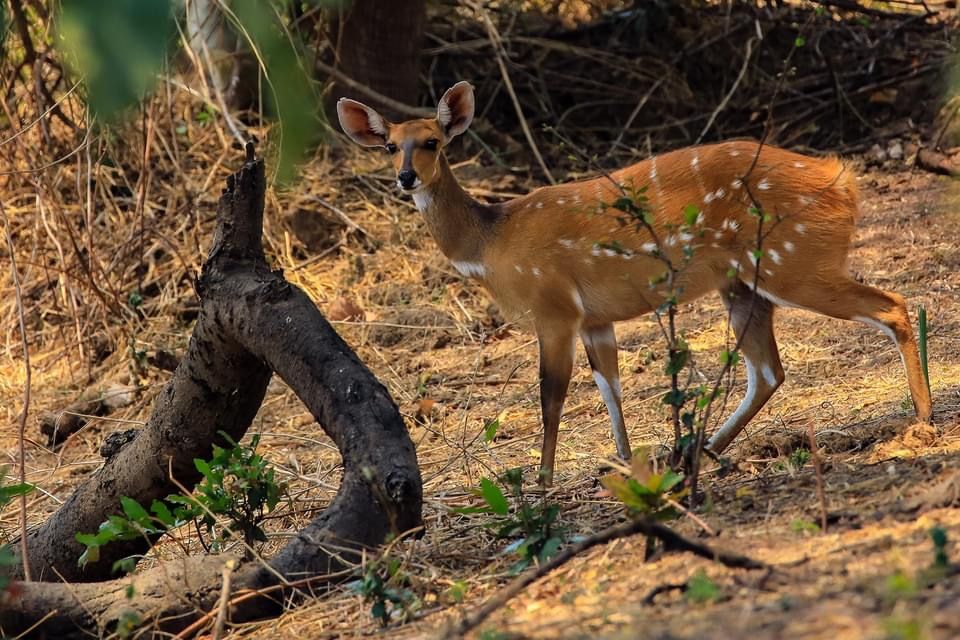
 Bushbucks are one of the most widespread kinds of African antelopes. Their small size, coloring, and reclusive behavior help them survive close to human settlements and in very small habitats. Bushbuck horns have a single twist and smooth edges. This design is well-suited to their preference for dense habitat, as the horns do not hinder their escape from predators.
Although bushbucks usually live alone, they occasionally spend time in pairs or even in small groups of adult females, adult females with young, or adult males. A unique social structure is exhibited by bushbucks In Uganda. There, the female young remain with their mothers throughout their lives, and adult females organize themselves into matrilineal clans. Each related group maintains and defends a home range against unrelated females. Related females also engage in grooming and other social activities. Males leave their mother’s home range to join a bachelor herd when they are six months old and fight other male groups to gain territory.
Bushbucks spend most of their time eating, ruminating, resting, and moving. They are most active at dawn and dusk, though this varies based on season, age, and sex. Males are often combative. A male will first feign an attack by lowering his horns to the ground, but if he and his opponent are closely matched, they will lock horns and try to stab each other’s sides. While female bushbucks can be aggressive toward other females, they tend to fight much less than males. Bushbucks have a keen sense of smell. When either a male or a female senses a predator in the distance, they freeze and drop to the ground, keeping their head and neck against the earth until the danger passes.
If the predator is close, a bushbuck will emit a bark and flee into the bush with its tail raised.
Bushbucks are solitary creatures that communicate mainly through scent-marking rather than vocalization, although they occasionally emit a bark to warn of danger. A male bushbuck signals a challenge to another male by adopting a rigid walk, raising his head, arching his back, and lifting his tail. If the opponent is an equal match, he takes up a similar posture and the two circle one another; if the opponent submits, he keeps his head low and licks the dominant male. Some researchers think males may bark to indicate their status to another bushbuck.
Bushbucks are browsers. They eat a range of herbs and young leaves from both shrubs and trees throughout the day and night. They also raid farms and plantations to eat crops.
During courtship, the male nuzzles and licks the female, strokes her back with his cheeks, and presses his head or neck against her. If the female accepts his advances, the male guards her against any other eager males. Female bushbucks gestate for 24 to 35 weeks and usually bear a single calf, though occasionally they have twins. Females give birth in dense thickets, where the calves remain for up to four months while their mothers leave to graze. A male’s horns begin to emerge at seven months. Males reach sexual maturity at ten months, but most do not breed until they are two years old. Females reach maturity between 14 and 19 months and can give birth every year. @GodfreyT
#Interiorsafaris East Africa
#Africa #Uganda #Fauna #Antelope #Bushbuck
If one trophy hunter can spend $200,000 to hunt exotic animals and say it is not about killing, and it is about helping wildlife conservation is he/she being realistic? Wouldn't one say if it is not about the thrill of killing an animal and it is about the love you have for wildlife then why not use the money in a way that saves our wildlife and their future?
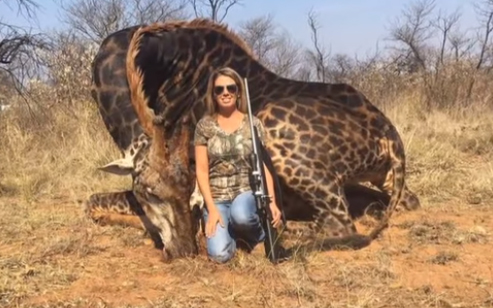
Isn't Trophy hunting more about the money versus conservation? Breeding and raising wildlife is a million-dollar business. Do you believe it is about conservation or about the money that flows into one's pocket?
Let us take a look at one organization in Texas that claims to be about conservation: This organization run by 2 people has convinced wildlife lovers and organizations that they care about conservation and with this approach has easily raised millions of dollars to get the business up and running!
Mojostreaming has spoken with the founder and he believes we are not fully educated on what the organization is about. We have invited him to be our guest on our talk show to help us better understand. We are still waiting on his reply.
We encourage you to look up wildlife ranching in America (most are in Texas) One rancher received over 11 million from investors and I believe they easily convince people they are about conservation versus making money off of selling exotic animals to zoos and making money off of enclosed trophy hunting where people easily pay 10,000+ for a kill.
Please research and see what you find and come up with your own impressions.
Let us watch this news documentary and ask yourself if it is okay to kill 8 to 14 other wild animals to bait one leopard so you can kill that one leopard. The fee to participate in this sport cost over 26,000 with the loss of up to 15 animals. Why? just so you can place the head on your wall, take a photo and brag to your friends, and then sell the skin for you to make money off of? Then tell yourself that you love wildlife and you are helping conservation.
https://www.youtube.com/watch?v=-NdopGBtb0A
ILLEGAL WILDLIFE TRADE IS A HUGE PROBLEM- it generates millions of dollars at the expense of the species. Many animals are on the brink of extinction and one country to blame is the United States of America because that is where the big buyers come from: Click on the link below to learn more:
Not only do we have to worry about the illegal trade of wildlife we have to worry about whether our Zoos are participating in such acts.
Please watch: mojostreaming.com
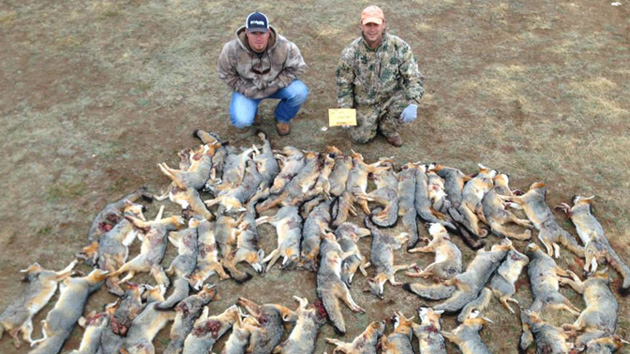
We can also debate hunting in your local state to control wild animals such as deer, raccoons, turkey, and more. We are not doing enough to make sure hunters are following proper protocol. Are licenses being purchased? Are they tagging and reporting their kill and keeping it to their assigned limit? Are they baiting- using salt block, night cameras, feeding stations? Are they using dogs, scents, and other enticing products to fool the animal? Are they hunting in enclosed fencing like they do in Peru, Indiana? Are they dumping the carcass or taking it to the properly assigned stations for their area? Are they hunting for food or for the trophy and bragging rights? Are they completing the proper permits to be on someone's property, and tagging their stand? It is easy to not follow such guidelines when you have stores like Rural King promoting special feed, salt blocks, and other baiting products during hunting season. How about the hunting contest that is going on in America.
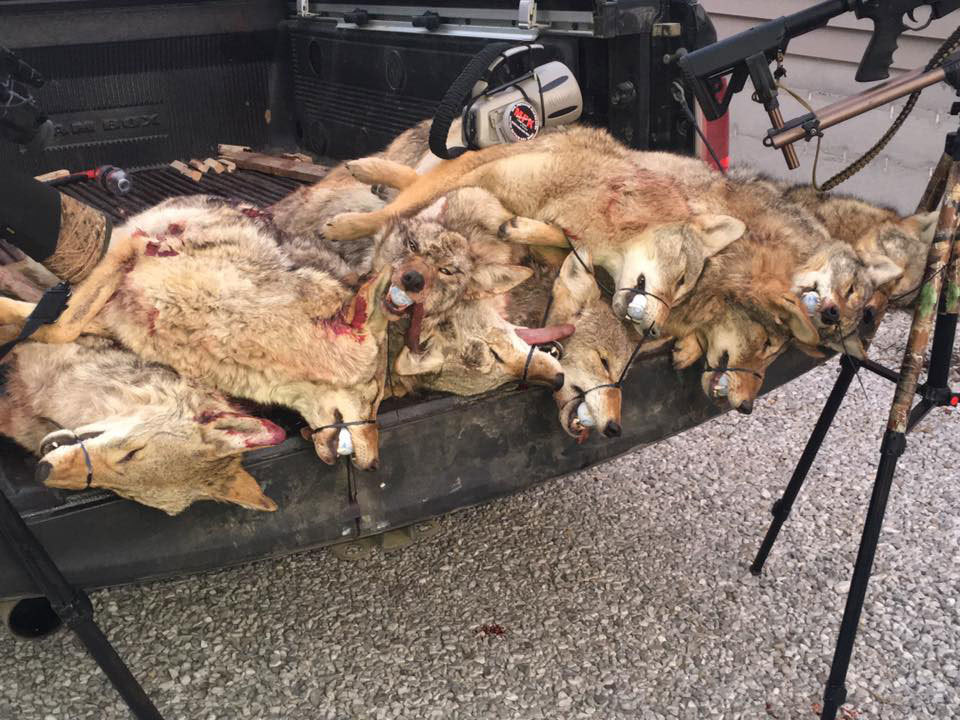
Coyotes were killed at the Southern Illinois Predator Challenge in 2017. COURTESY OF MARC AYERS/HUMANE SOCIETY OF THE UNITED STATES
MojoStreaming’s Volunteer Wildlife News Broadcaster contest:
Are you a wildlife lover who either dream of becoming a social media influencer or
wants to report on important wildlife issues from around the Globe?
(Must be 21 or older to enter)
MojoStreaming, the new Wildlife channel is holding a contest to find a Volunteer Broadcaster (Newsreader) to report on Wildlife issues on our News channel. Become the first of our eventual
team of newsreaders from time zones around the world.
The
Contest
Phase
One
How to enter:
Submit
a video of yourself reporting on two current wildlife issues, one in North America, the other in Africa. Collectively, the two reports must be no less
than 3 minutes (180 seconds), and no more than 4 minutes twenty seconds long (260 seconds). How you choose to present is up to you.
Beginning at 8:00 P.M. Eastern Time (“EST”) on March 22, 2021, until 11:00 p.m. EST on April 5, 2021 (The “Submission Period”),
you may upload your submission Video on MojoStreaming in the following way:
Visit the MojoStreaming website (www.mojostreaming.com) and open a free account by clicking on the Sign-up Tab on the top of the home page.·
When you have signed up, click on the Upload Tab.
Click on the Video Icon
Under the heading Title, enter your full legal name, followed by “News Broadcaster Submission”.
Under the heading Description, enter a brief description of your video.
Under the heading Category, Select the “Broadcaster Contest” option
Under the heading Privacy, choose Public
Click Upload.
Although it has been loaded, your video will not go live until April 6 on or around about 8.00 p.m. EST, when it will become visible on our channel for the first time.
Beginning April 6 through April 18, 2021, 11:00 P.M. EST, entrants should promote their video by asking friends & family to” like” their video by clicking the
thumbs-up icon.
To vote a person must open up an account and login to be able to vote for the video of their choice.
Only one (1) vote per account/per video will be recorded.
On April 19, 2021, all the videos EXCEPT the 6 videos with the most likes will be deleted from the Broadcasting Contest channel.
These six videos will move forward to the second round of the Contest (Phase Two)
On April 20-25, 2021, the six Finalists will be contacted by email associated with their mojostreaming.com account
Phase 2
For In the final round (Phase Two) of the Contest, the top six (6) contestants will be required to conduct an interview with a Wildlife Conservation Personality of
MojoStreaming’s choice, on a subject matter of MojoStreaming’s choice. The interview will be up to 30 minutes in duration. The first Finalist conducted
interview will take place on May 5, 2021, at 8:00 P.M. EST, and the last on June 9, 2021, at 8:00 p.m. EST
The announcement of the winner chosen by MojoStreaming Ltd. Executives will be at a live-streamed virtual event on MojoStreaming.com
on June 16, 2021, at 8:00 P.M. EST
The First Phase of the Contest begins on March 22, 2021, at 8:00 P.M. Eastern Standard Time and ends on April 5, 2021
at 11:00 P.M. Eastern Standard Time (the "Contest Period"). Entries that are submitted before or after the Contest Period will be disqualified.
Submissions will be accepted for the duration of the Contest using the following method:
Online
Online:
This method of entry will be available by visiting our website (www.mojostreaming.com) BLOG and/or NOTICES at the footer of the site and
following the directions provided.
Limit one (1) entry per person, per email address, and per household for the duration of the Contest Period, regardless of method
of entry. Entries received from any person, e-mail address, or household more than the stated limitation will
be void. All entries become the property of the Sponsor and will not be acknowledged or returned.
7. Contest finalists
On or about April 19, 2021, the Sponsor will select the six potential finalists of Phase one of the Contest from the
six most voted for of all eligible entries received. The Sponsor will attempt to notify the potential finalists via email on or about April 20, 2021. If a
potential finalist cannot be contacted within five (5) days after the date of the first attempt to contact him/her, the Sponsor may select an alternate
potential finalist in his/her place at from the seventh most voted of the eligible entries.
8. Finalist Notifications
The potential finalists will be notified by email. Each potential Finalist will be required to complete,
electronically sign and submit a Declaration of Compliance within five (5) days of the date notice or attempted notice is sent, in order to be considered a
finalist. If a potential finalist cannot be contacted or fails to submit the Declaration of Compliance within the required time period potential
finalist forfeits the prize. Potential finalists must continue to comply with all terms and conditions of these Official Rules and winning is contingent
upon fulfilling all requirements. In the event that a potential finalist is disqualified for any reason, the Sponsor may select an alternate potential
finalist in his/her place from the seventh most voted of the eligible entries. In the event of further disqualifications, the Sponsor may continue
to choose finalists from the next most voted-for entries until the six required finalist positions have been fulfilled.
9. Winners
The six contestants whose video submissions receive the most votes (the Finalists) will move forward to Phase two of
the Contest.
Phase Two
10. Contest Period
The Second Phase of the Contest begins on April 25, 2021, at 8:00 P.M. Eastern Standard Time and ends on June 9, 2021, at 8:30
P.M. Eastern Standard Time (the "Contest Period").
11. How to Enter.
Each Finalist will be given half an hour to conduct a Livestream interview with a Wildlife Personality chosen by the Sponsor, on a
date and time prescribed by the sponsor. You will have April 26, 2021 – May 4, 2021, to prepare. The first Finalist
conducted interview will take place on May 5, 2021, at 8:00 P.M. Eastern Standard Time, and the last on June 9, 2021
at 8:00 P.M. Eastern Standard Time. The Livestream interview will be made available to be watched by MojoStreaming subscribers.
12. Winner Notifications
The overall winner will be chosen by the Sponsors, and the winner will be announced at a live-streamed virtual event on MojoStreaming.com on June 16 at 8:00 P.M. Eastern Standard Time.
All the Finalists will attend virtually. The virtual live event will be made available to be watched by MojoStreaming subscribers.
13. General Conditions
In the event that the operation, security, or administration of the Contest is impaired in any way for any reason, including,
but not limited to fraud, virus, bug, worm, unauthorized human intervention or another technical problem, or in the event the Contest is unable to run as
planned for any other reason, as determined by Sponsor in its sole discretion, the Sponsor may, in its sole discretion, either (a) suspend the Contest to
address the impairment and then resume the Contest in a manner that best conforms to the spirit of these Official Rules or (b) terminate the Contest and, in the
event of termination, award the Prize at random from among the eligible, non-suspect entries received up to the time of the impairment. The Sponsor
reserves the right in its sole discretion to disqualify any individual it finds to be tampering with the entry process or the operation of the Contest or to be
acting in violation of these Official Rules or in an unsportsmanlike or disruptive manner. Any attempt by any person to damage the website or undermine
the legitimate operation of the Contest may be a violation of criminal and civil law, and, should such an attempt be made, the Sponsor reserves the right
to seek damages (including attorney's fees) and any other remedies from any such person to the fullest extent permitted by law. Failure by the Sponsor to
enforce any provision of these Official Rules shall not constitute a waiver of that provision.
14. Release and Limitations of Liability
By participating in the Contest, entrants agree to release and hold harmless the Sponsor, and each of their respective parents, subsidiaries, affiliates,
advertising and promotion agencies, other companies associated with The contest, and each of their respective officers, directors, employees,
shareholders, representatives, and agents (the Released Parties) from and against any claim or cause of action arising out of participation in the
Contest or receipt or use of the prize (including any travel or activity related thereto), including, but not limited to: (a) any technical errors
associated with the Contest, including lost, interrupted, or unavailable Internet Service Provider (ISP), network, server, wireless service provider, or
other connections, availability or accessibility or miscommunications or failed computer, satellite, telephone, cellular tower or cable transmissions, lines,
or technical failure or jumbled, scrambled, delayed, or misdirected transmissions or computer hardware or software malfunctions, failures or difficulties;
(b) unauthorized human intervention in the Contest; (c) mechanical, network, electronic, computer, human, printing or typographical errors; (d) application
downloads, (e) any other errors or problems in connection with the Contest, including, without limitation, errors that may occur in the administration of
the Contest, the announcement of the winner, the cancellation or postponement of the event and/or the flyover, if applicable, the incorrect downloading of
the application, the processing of entries application downloads, or in any Contest-related materials; or (f) injury, death, losses or damages of any kind,
to persons or property which may be caused, directly or indirectly, in whole or in part, from entrants participation in the Contest or acceptance, receipt or
misuse of the prize (including any travel or activity related thereto). Entrant further agrees that in any cause of action, the Released Parties liability will
be limited to the cost of entering and participating in the Contest, and in no event shall the entrant be entitled to receive attorney's fees. Released
Parties are also not responsible for any incorrect or inaccurate information, whether caused by site users, tampering, hacking, or by any equipment or
programming associated with or utilized in the Contest. Entrant waives the right to claim any damages whatsoever, including, but not limited to, punitive,
consequential, direct, or indirect damages.
15. Disputes
Except where prohibited, each entrant agrees that any and all disputes, claims, and causes of action arising out of, or
connected with, the Contest or any prize awarded shall be resolved individually, without resort to any form of class action, and exclusively by
the appropriate court located in Ontario, Canada. All issues and questions concerning the construction, validity, interpretation, and enforceability of
these Official Rules, entrants rights, and obligations, or the rights and obligations of the Sponsor in connection with the Contest shall be governed
by, and construed in accordance with, the laws of Ontario, Canada, without giving effect to any choice of law or conflict of law
rules, which would cause the application of the laws of any jurisdiction other than Ontario, Canada.
12. Privacy
Information collected from entrants is subject to the sponsor's privacy policy.
Uganda earned its status as a bucket list destination thanks
to the country’s most famous residents, the majestic mountain gorilla. The
thrill of trekking through Bwindi Impenetrable National Park and spending time
in the presence of these extraordinary animals draws travelers from around the
world, but there’s so much more to Uganda than awe-inspiring apes.
This astonishingly diverse country which Winston Churchill
famously dubbed the ‘Pearl of Africa’ is also home to tree-climbing lions, some
of the rarest bird species on the planet like the African-Green Broadbill
and the spectacular natural scenery that will leave you in awe.
Are you an animal activists or you are a conservationist, or you are just a nature lover or both, If you’re ready to start planning the ultimate Uganda
itinerary, read on for a list of remarkable experiences from wildlife viewing
to cultural attractions that can’t be missed.
Elephant surrounded by grass and trees in Uganda
Spot four of the Big Five on safari in Uganda- © Godfrey
Elasmus.
1. Chimpanzee trekking in Budongo Forest Reserve
Chimpanzee trekking offers a completely different experience
to a traditional gorilla trekking tour. Rather than observing gentle giants in
a quiet, intimate setting, you’ll follow a boisterous group of chimps as they
leap and scamper through Budongo Forest Reserve, heading in whatever direction
the agile animals lead you.
The reserve is home to nearly 700 of these playful primates
including six groups habituated for trekking. Knowledgeable guides follow the
chimps’ daily movements and lead groups of up to six people into their habitat.
Much like on a gorilla trek, it can take anywhere from 30
minutes to a full day to locate a group of chimpanzees, which provides ample
time for participants to learn about the forest’s ecology before spending an
hour watching a chimp family play and go about their daily lives in the wild.
Chimpanzee swinging from tree branches in Uganda
Add chimpanzee trekking to your Uganda itinerary-© Godfrey
Elasmus.
2. Look up for the tree-climbing lions in Queen
Elizabeth National Park
Not only is Queen Elizabeth National Park home to four of
the Big Five safari animals (lion, leopard, elephant, and Cape buffalo), it’s
also one of the few places on the continent where you can see a wonderfully
rare wildlife sighting: tree-climbing lions.
the wide branches of acacia and sycamore fig trees to catch a cool breeze and
avoid insect bites on the ground-a unique behavior that’s rarely exhibited in
other lion populations. If your safari guide shouts “lions!” in this region,
remember to look up rather than out at the grasslands.
equator. Monuments on both sides of the road mark the exact spot of latitude
00, a perfect photo opportunity.
Lion in the grass in Uganda
Look for lions on the ground and up in trees in Queen
Elizabeth National Park-©Godfrey Elasmus
3. Spot rare bird species in Uganda’s parks
If you’re a birding enthusiast, prepare to be wowed: Uganda
is home to more than half of Africa’s bird species, and it’s one of the richest
birding destinations on the continent. Visitors from across the globe flock to
Uganda hoping to get a glimpse of more than 1,000 species, including several
found nowhere else on Earth.
as 200 species in a single day. Keep an eye out for the prehistoric-looking
shoebill stork, considered one of the most desirable bird sightings in Africa;
the colorful African green broadbill found in Bwindi Impenetrable National
Park; and one of the world’s rarest birds: the elusive Shelley’s crimson wing
(which can be found in Bwindi and Kibale National Park).
Uganda is an excellent destination for birding enthusiasts.
4. Ride the Nile to Murchison Falls
Majestic waterfalls draw visitors to Murchison Falls
National Park, and a boat trip along the Nile River to their base is one of
Uganda’s signature wildlife activities.
personal with an abundance of wildlife, including hippos, Nile crocodiles,
elephants, giraffes, buffaloes, and plenty of birds.
safari, along with incredible photo opportunities. An early boat trip in the
cooler morning hours is often followed by an afternoon game drive and
sundowners, while a morning game drive and bush breakfast set the stage for an
afternoon boat trip.
Murchison Falls, Uganda -©Godfrey Elasmus
5. Whitewater rafting on the Nile
When it comes to adrenaline-fueled activities in Uganda,
look no further than Jinja, the undisputed adventure capital of East Africa.
kayaking and bungee jumping-nothing is more thrilling than whitewater rafting
on the Nile. This mighty river boasts class 1-6 rapids, making it an ideal
activity for first-time rafters, families, and adrenaline junkies looking for
an unforgettable adventure.
float, swimming in the river’s warm pools along the way, while those opting for
higher class rapids can set off on a heart-pounding adventure filled with
plenty of thrills and spills.
The Nile River, Uganda
6. Get buzzed on a coffee safari
Uganda is quickly becoming the next up-and-coming
destination for specialty coffee in East Africa thanks to its high-quality
Arabica coffee plants.
A coffee safari in the Sipi Falls region or the Buhoma
sector of Bwindi Impenetrable National Park is a fantastic way to learn about
the country’s burgeoning coffee industry (and get your caffeine fix at the same
time).
give visitors the chance to explore coffee farms, meet local farmers, and learn
about the stages of production from field to cup. Of course, a sample of the
plantation’s finest brew is included as well.
Experience the beauty of Uganda’s rural regions-©Godfrey Elasmus.
7. Experience the culture of rural communities
Uganda’s culture is defined by its colorful communities and
more than 50 distinct ethnic groups. Each area of the country offers
opportunities for visitors to interact with locals and learn about their unique
customs and livelihoods.
National Park offer a glimpse into the living history of this tribe that once
called Uganda’s forests home. The Batwa are one of the oldest surviving
communities in Africa and have preserved many of their traditions.
The Ik reside on Mount Morungole
near Kidepo Valley National Park and welcome visitors who partake
in a challenging day-long hike to their isolated home.
Ik have been able to maintain their ancestral customs dating back
thousands of years and willingly share these with visitors keen to make the
trek.
Head to www.interiorsafarisea.com now to explore a range of Uganda tours, and
get ready to cross these bucket list-worthy adventures off your list-©Godfrey Elasmus