Tourism is a recreational travel that people do, Uganda has
been one of the African countries that has attracted prominent number of
tourists from different parts of the world. Uganda the pearl of Africa is one
of the fastest growing economies in Africa, there are so many building blocks
of this economy but one of the vital one that she is proud of is her tourist
attraction that she exhibits to tourists, with a lot of nature, culture and
amusement to offer. A tree did not start as a tree it started as a seedling
sown in the soil and because of the rich nutrient of the soil and care given to
it, it turned it into a tree, there are companies that have thrived and are
still pushing hard to strengthen the tourism industry in Uganda. One of them is
Interior safaris East Africa, one of the veins of the heart of Uganda tourism.
Uganda
has one of the best climates in Africa and in the whole world, this has maintained her tourist
attractions which has made it possible for tourism to occur. One of Uganda’s
tourist attractions are national parks, Uganda has numerous national parks like
Murchison Falls National Park often known as Kabalega mostly visited by
tourists because of its natural beauty, it’s located in the northern region of
Uganda it is 1,344 square miles large this makes it the largest wildlife
reserve. Queen Elizabeth National
Park which is 1,978 square kilometers in size and Lake Mburo National Park etc.
Uganda also has unique eye-catching features in the national parks like trees,
different species of birds and mountain gorillas. Interesting and enjoyable
activities at your view from different parts of the parks which includes
birding, chimpanzee tracking, cultural visits like meeting pygmies from Batwa
who were the first inhabitant of montane rainforest, hot air balloon safaris
and boat cruise. Due to the magnificent hospitality that Ugandans give tourists,
has increased their interest in touring the country because they make them feel
at home. All national parks in Uganda have lodges and hotels at different
points of the national parks which provide the tourists with good care, great
meals and fancy accommodation. When it comes to the longest river in the world
don’t look farther because it’s here in Uganda as well as mount Elgon, these
are places tourists won’t stop talking about because they are enticing and rich
in nature.
Life
has been made easy in case you would love to tour Uganda; with the help of
Interior Safaris East Africa you can be anywhere you want to be. Interior
safaris East Africa has been in the center of the tourism industry in Uganda,
it was founded by Elasmus Godfrey Tumwesigye in 2013. It has its head office in
Uganda. Interior safaris East Africa cares so much about their customers to the
extent that we have Agents in Europe for tourists interested in bare a peek of
the pear of Africa and the great lakes at large. Interior Safaris East Africa is surely the
right package deal to take you around Uganda, Rwanda and Tanzania because it
comes With lots of surprises from their services, Interior Safaris East Africa
gives the best to its customers, and that’s why before tourists decide on the
place they would love to visit they first speak to a tour consultant from Interior
Safaris East Africa who will later give them advice about the package that will
fit in their budget that they will be comfortable with.
Connect now to be in a
place enriched with nature.
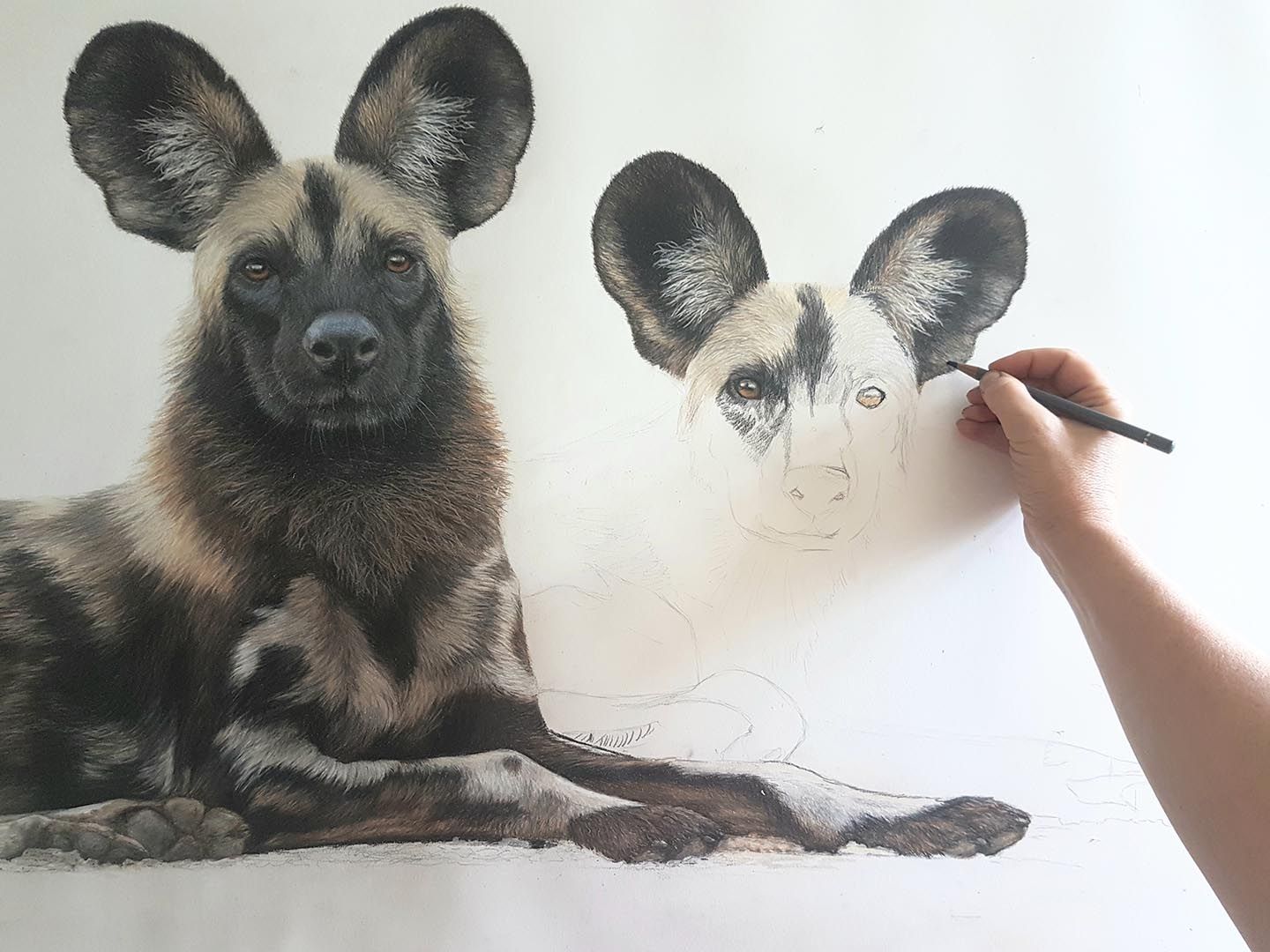
Charlotte Williams is a
highly respected and increasingly celebrated British fine artist with a
particular interest in wildlife. She is entirely self-taught and was
drawing her first animal portraits as young as nine years old.
Despite being afforded a scholarship to Farnham Art College
in her late teens, she headed instead for South Africa and the ‘bush’, where
she spent several years living and working on a game reserve in the Eastern
Transvaal. Immersed in the raw environment of the veldt, it was here
that Charlotte’s life-long passion for animals and the wild was born, and
where she passed many hundreds of hours wandering, observing and sketching all
that she saw.
On her return to the
UK in the mid-1990s, Charlotte continued to dedicate herself to art,
this time in Brighton. She went on to exhibit her work in numerous shows -
locally, and in London. She has since been in great demand and
the majority of her work today is by commission, both at home and
abroad.
Charlotte’s consuming affection for wildlife
conservation has remained paramount, and her depiction of Cecil The Lion,
who lived primarily in the Hwange National Park in Zimbabwe, has become one of
her iconic portraits. She later auctioned the portrait to
raise funds and awareness of the battle against poaching, and she today
continues to support myriad conservation enterprises and wildlife foundations
across the globe.
Each of Charlotte’s meticulous artworks aims to capture the
soul and spirit of her subjects, from behind the eyes, so that you might know
them and feel them, as if they were living and breathing before you. Her
appreciation of wild animals, coupled with her unapologetic perfectionism -
enable her to create paintings and drawings that are unique and wholly
authentic.
Though now based in her studio in rural East Sussex since
2010 she has an ever growing global following on social media and has
recently been made a signature member of Artists For Conservation. She is
represented by numerous people, including the prestigious London and Sussex
based gallery Rountree Tryon and has exhibited at, amongst others, Masterpiece
Art and Gallery Different in London
.
By Claudiu Popa, CISSP CIPP PMP CISA CRISC. Chairman and Co-Founder, The Knowledge Flow Cyber Safety Foundation
I have submitted a letter to the editor of the Guardian in response to the following article which reports on an open letter signed by a group of "leading Scientists and Conservationists". (see link below) The letter attacks what the writer has termed "poorly conceived hunting legislation":
www.theguardian.com/environment/2022/jan/13/poorly-conceived-trophy-hunting-bill-puts-wildlife-at-risk-uk-government-told
A proposed UK ban on trophy hunting imports risks undermining the conservation of rhinos, elephants and other endangered wildlife, according to a group of leading scientists and conservationists who said African perspectives have been ignored by the government.
On Friday, MPs will vote on a private member’s bill to ban trophy hunting imports while, separately, the government is preparing legislation to ban hunting trophies from thousands of species, including lions, leopards, rhinos, elephants and polar bears.
In an open letter seen by the Guardian and signed by more than 100 scientists, conservationists and African community leaders, the group said the ban is poorly conceived and threatens to reverse conservation gains and undermine the livelihoods of rural communities across sub-Saharan African.
It urged the UK government to implement a smart ban that incentivises good practice by prohibiting trophies from “canned” hunting operations, where captive-bred animals are shot at close range, or those that fail to share revenues with local communities.
By allowing trophy hunting to continue within the UK, where hunters can pay thousands of pounds to shoot deer, the group said the government was opening itself up to accusations of hypocrisy by banning imports from countries with impressive conservation records such as Namibia and Botswana, where trophy hunting is used to fund conservation.
“We understand (and many of us share) the public’s instinctive dislike of trophy hunting. However, the reality is that no alternative land use has yet been developed which equally protects the wildlife and habitats found in these vital landscapes while also generating valuable revenues for local communities. Indeed, where trophy hunting has been subjected to bans, wildlife has often suffered, and conflict with communities has increased,” the letter states.
“This is not to claim that trophy hunting is perfect. It is beset with a variety of problems, including but not limited to the inequitable sharing of hunting revenues, inappropriate or poorly observed quotas, corruption and inadequate regulation. But tourism is not a perfect industry either,” it continues.
Signatories include the heads of leading conservation NGOs such as Save the Rhino International, academics from the University of Oxford and African community leaders.
The IUCN, which oversees the red list of endangered species, established that trophy hunting has supported the conservation of several species, including rhinos, African elephants and markhors, the national animal of Pakistan, and a UN report said that trophy hunting is helping to protect millions of acres of wildlife habitat in sub-Saharan Africa. Community leaders have previously criticised British celebrities for calling for a ban on trophy hunting, naming Ricky Gervais, Joanna Lumley and Piers Morgan in July 2020.
Supporters of the trophy hunting import ban argue it will help protect endangered species and end a cruel practice. The prime minister, Boris Johnson, has called trophy hunting a “disgusting trade” and his father, Stanley, has campaigned in favour of the ban.
But Leslé Jansen, CEO of the NGO Resource Africa, who signed the letter, said the legislation will harm conservation and African livelihoods and undermine the rights of rural communities to use their natural resources.
Supporters of the ban say it will help protect endangered species as well as ending a cruel practice. Photograph: Johnny Armstead/Alamy
“We have voiced these concerns many times, and have attempted to engage in the process. Why are Africans’ rights, views and conservation successes continually ignored?” she said.
Dr Rodgers Lubilo, chairman of a community leaders network covering Angola, Botswana, Malawi, Mozambique, Namibia, South Africa, Tanzania, Zambia and Zimbabwe, called on the government to reconsider the proposed legislation.
“We have time and again told our international friends that trophy hunting is part of local rural livelihoods, and we will continue to pursue sustainable use of wildlife for generations to come,” he said.
Dr Amy Dickman, a professor of conservation at Oxford University who signed the letter, said: “We shouldn’t base policy on what comedians and celebrities think. We should be basing it on expertise and on local opinion. Those are the two things that count the most.
“Ricky Gervais has 14 million followers on Twitter, whereas the African Community Leaders Network, when they post about this, tend to get zero engagement. The people most affected have the smallest platforms,” she said.
A Defra spokesperson said: “We are bringing forward ambitious legislation to ban the import of hunting trophies from thousands of species.
“This will be one of the toughest bans in the world, and goes beyond our manifesto commitment, meaning we will be leading the way in protecting endangered animals and helping to strengthen and support long-term conservation.”
Find more age of extinction coverage here, and follow biodiversity reporters Phoebe Weston and Patrick Greenfield on Twitter for all the latest news and features
.
What a spectacular rejection of common decency it must have taken for this clique of "scientists and conservationists" to sign a letter in favor of cruelty to animals!
The hyperbolic claims of a group of misguided officials and corrupt functionaries even managed to bamboozle "African community leaders", striping their people of dignity and respect in the rich tradition of neo-colonialism and greed.
From the disgraceful distortion of local people's interests to the shameless public pandering for undeserved pity, to lobbying the UK government in favour of commercial interests (read: safari hunters, whose definition of 'conservation' is an offensive aberration designed to confuse the public about the differences between industrial-scale poaching, bushmeat hunting, subsistence hunting, defensive hunting, trophy hunting and regulated hunting), this is all sadly reminiscent of the situation that describes the embarrassing Canadian seal hunt, whose persistence in spite of all rational argument is a testament to the influence of histrionic appeals to authorities.
For these 100 signatories to stoop so low as to relinquish all claims to professional integrity and use misdirection by suggesting that the real opponents here are comedians and celebrities instead of human dignity and basic animal rights, is to irreversibly abandon any claim to respectability and credibility. The world's effort to criminalize trophy hunting has been described as "poorly conceived", but a doctrine of sadism could indeed only be concocted by those who have in fact been "poorly conceived". If the supporters of such carnage are indeed endowed with professional qualifications, their calls to stop resisting and just embrace the killing categorically disqualify them from taking part in any exercise requiring critical thinking, let alone patronizing the public on behalf of private interests.
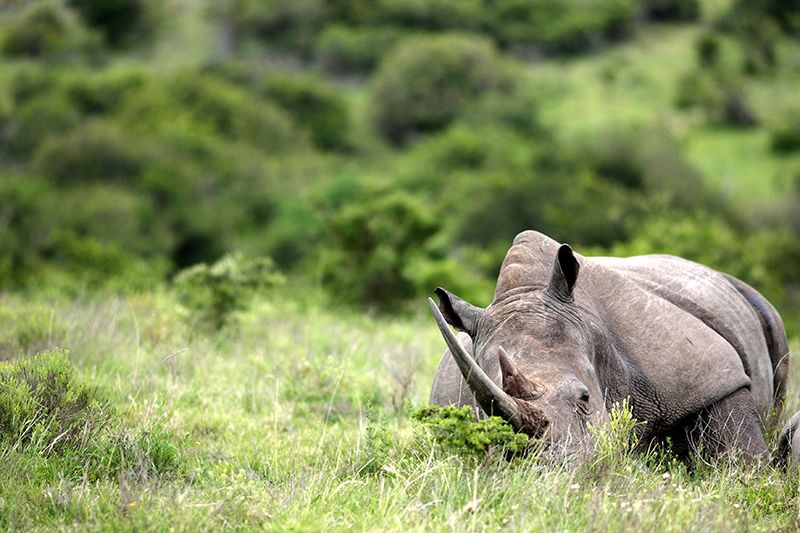
This ragtag posse of incentivized individuals claims moral authority, a warrant, a mandate to tell people they are wrong in protecting innocent fauna from psychopaths based solely on non-founded claims and shockingly contrived affirmations. Obnoxious and toxic claims that the first world's "corruption by abundance" and "suburban comforts" act as a distorting lens on the real pleas of animals - like Cecil the Lion, who apparently had it coming - and should be extinguished for sport so that so many others can hope be spared by the insatiable demand fueled by trophy buyers. Lest we forget the silent plea of the impotent foreign millionaire with delusional aspirations of "keeping the yang up" with powdered tusk, leopard claw, tiger bone, rhino horn and liquefied ivory. Such misinformation and conspiratorial thinking leads to countless human crimes against decency, from the very visible rhino and elephant hunts to the silent tragedies of sharks and seahorses, but apathy and the bystander effect play as much of a role as the crime itself. Belittling people with childish and romantic accusations of anthropomorphizing animals is not going to eliminate the common sense reality that trophy hunting is about satisfying the base instincts of sad, broken people who need to kill or amass the proceeds of slaughter. No son of Trump's will ever convincingly make a rational point, least of to claim that by cowardly brandishing the severed tail of a slaughtered elephant he was in fact the courageous savior of a defenseless African village. Trophy hunting and poaching are neither about defense nor subsistence hunting. It's not about anecdotal criminal activity but about legitimizing large scale, recreational killing with the complicity of authorities that turn a blind eye to the suffering of creatures genetically similar to their abusers. Using local farmers and starving populations as negotiating pawns in the argument that an illegal market is unsustainable is bunk because such a market reduces the surface measurably as opposed to opening it up immeasurably. For rational beings to side with criminals by saying that it is best to embrace their practices than to suffer at their hands is pure nonsense, but it has a long tradition in the colonialist mindset.
Few things can make me blacklist an animal conservation charity, but the use of fear, uncertainty and doubt to deceive and bully the public into supporting the morally bankrupt, "shoot to conserve" mindset is indeed an affront to the most basic sensibilities of any thinking person. Not that anyone will care, but I had the regretful task of removing two groups from my list of supported organizations (on ClaudiuPopa.ca/personal) which, at the risk of coming across as a feeble attempt at breathless virtue signaling, is simply my personal resignation to the reality that we all need to get involved, contribute and a reminder to consistently do our due diligence.
Claudiu Popa
Toronto, Canada
January 2022

A Zoo in My Luggage by Gerald Durrell
In 1957, Gerald Durrell and his wife set out to "collect" animals from Bafut in the British Cameroons of West Africa for their zoo, a location for which was yet to be secured. They returned with a menagerie of creatures and the novel is an account of how he shifts the animals around England while scouting for a permanent location. 'Throughout my life,' he writes, 'I have rarely if ever achieved what I wanted by tackling it in a logical fashion.' A Zoo in my Luggage is a hilarious true story of animal relocation written in Durrell's inimitable style that combines charming descriptions with dry humour. His timeless classic, My Family and Other Animals, is a childhood adventure. This novel captures his unwavering love for wildlife and nature as an adult.

The Jungle Book by Rudyard Kipling
Who can forget Mowgli? The little boy who was raised by a pack of wolves in the jungles of India. The book follows his adventures with all kinds of animals—Bagheera the black panther and Baloo the bear who teach him the important laws of the jungle to Sher Khan, the tiger who is Mowgli's mortal enemy. Other stories include Rikki-Tiki-Tavi, the tale of a brave mongoose who saves a family from two vicious cobras and Toomai, a young mahout and his elephant. The book transports you to a world of forests and animals, one riddled with meaning and symbolism in a way that can be enjoyed by both children and adults alike.

Man-Eaters of Kumaon by Jim Corbett
After much persuasion from his friends and family, Jim Corbett finally penned down this riveting memoir of his encounters with big cats in the Indian Himalayas. First published in 1944 by Oxford University Press, Corbett used stories from his previous book titled Jungle Stories as its basis. The stories follow him as he tracks and kills several man-eating tigers in India, including the terrifying Champawat Tigress, who set a world record by killing 436 people in Nepal and India before being shot by Corbett in 1907.

The Snow Leopard by Peter Matthiessen
The Snow Leopard is a day-by-day account of the author's journey into the remote Dolpo region of the Nepal Himalayas with his friend, the biologist George Schaller, to study the mating patterns of the Himalayan blue sheep. He also hopes to catch a glimpse of the elusive snow leopard which ultimately becomes a metaphor for his own spiritual quest as the book progresses. "Figures dark beneath their loads pass down the far bank of the river, rendered immortal by the streak of sunset upon their shoulders." His empathy towards the natural makes this book one of the greatest examples of both nature and travel writing.

The Elephant Whisperer by Lawrence Anthony with Graham Spence
Lawrence Anthony, the wildlife conservationist, took in a herd of wild African elephants at his Thula Thula game reserve. The matriarch and her baby had been shot leaving the herd traumatized and highly dangerous. Anthony realized he might be their last chance of survival. This book is the incredible story of his struggle to form a bond with these elephants who ultimately accepted Anthony as their matriarch. When he died in 2012, the same herd of elephants made a twelve-hour journey to his home to mourn his death.


 03 Min Read